📷 Image: Wikimedia Commons
Sigiburg
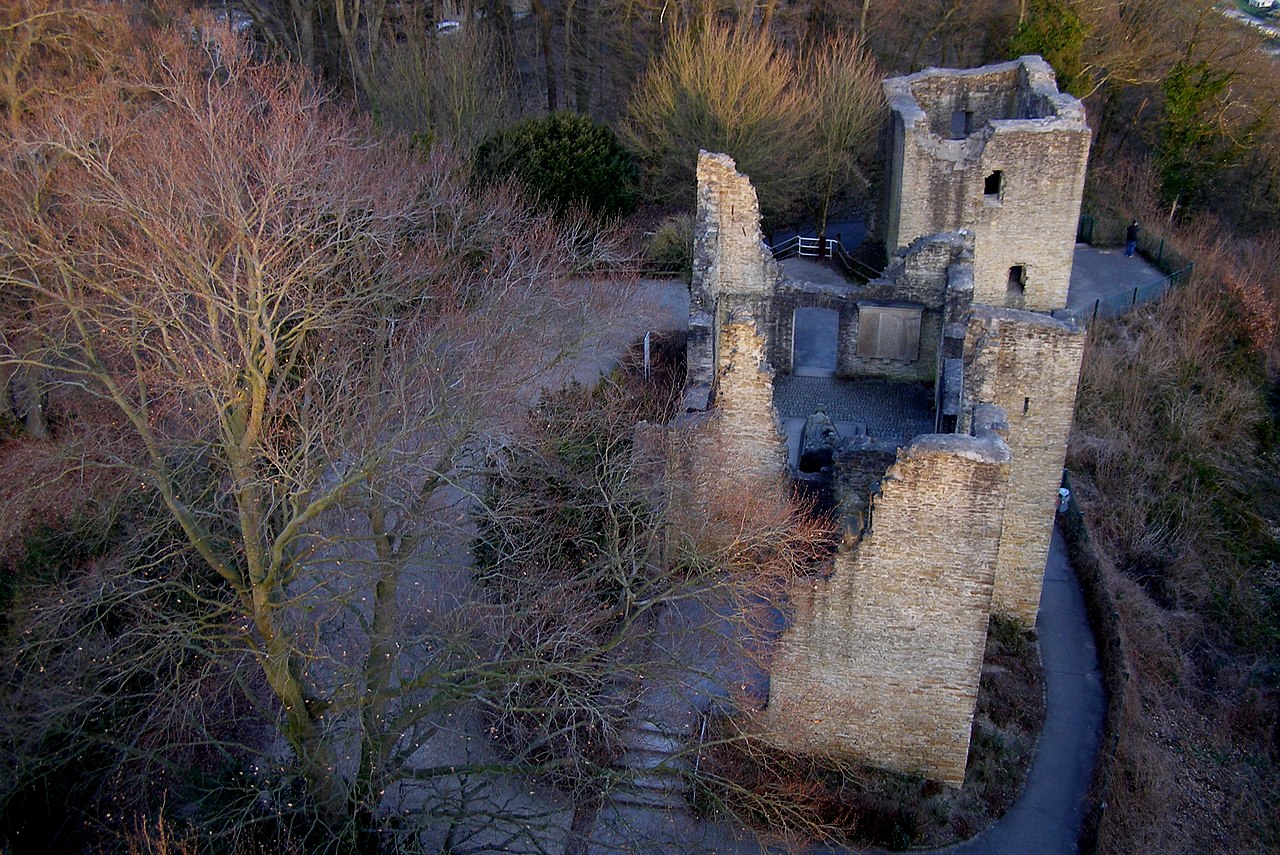
The Sigiburg was a Saxon hillfort in western Germany, overlooking the River Ruhr where it meets the River Lenne. The later Hohensyburg castle now stands on the same site in Syburg, a neighbourhood within Dortmund’s Hörde district. Archaeologists have found signs of occupation dating back to the Neolithic era. The hillfort itself was built around the year 700 by Westphalian Saxons. During the Saxon Wars it changed hands several times: Charlemagne’s Franks took it in 772, the Saxons—possibly led by Widukind—retook it in 774, and Charlemagne seized it again in 775 and rebuilt its defences. Hohensyburg’s ruins sit on a sandstone ridge about 100 metres above the rivers below. The castle’s curtain wall still encloses a courtyard where visitors walk among grass-grown foundations. Inside the courtyard stands the Kaiser Wilhelm Memorial, a tall monument built in the 19th century to honour the first German emperor. The monument’s observation platform gives wide views across the Ruhr valley and the surrounding hills. Below the ridge, the riverside park offers shaded paths and benches for quiet walks. Paths wind from the castle ruins down to the riverside park, passing a small chapel dedicated to Saint Peter. The chapel’s simple stone walls date from the 12th century and sit beside a modern sculpture garden. From the ridge, the rivers appear as silver ribbons threading through green woodland. On clear days the skyline of Dortmund can be seen to the north-west. The contrast between ancient walls, 19th-century monument and modern sculpture creates a place where history is visible at every turn.
Opening hours and admission prices change with the season and are therefore not part of this text. Current details from the operator
Discover more in this region
Themes around North Rhine-Westphalia


Nearby
🗺 Create a tour from these spots → ← All places to visit in North Rhine-WestphaliaQR-Code