Landmarks · Roma
Aventine Hill
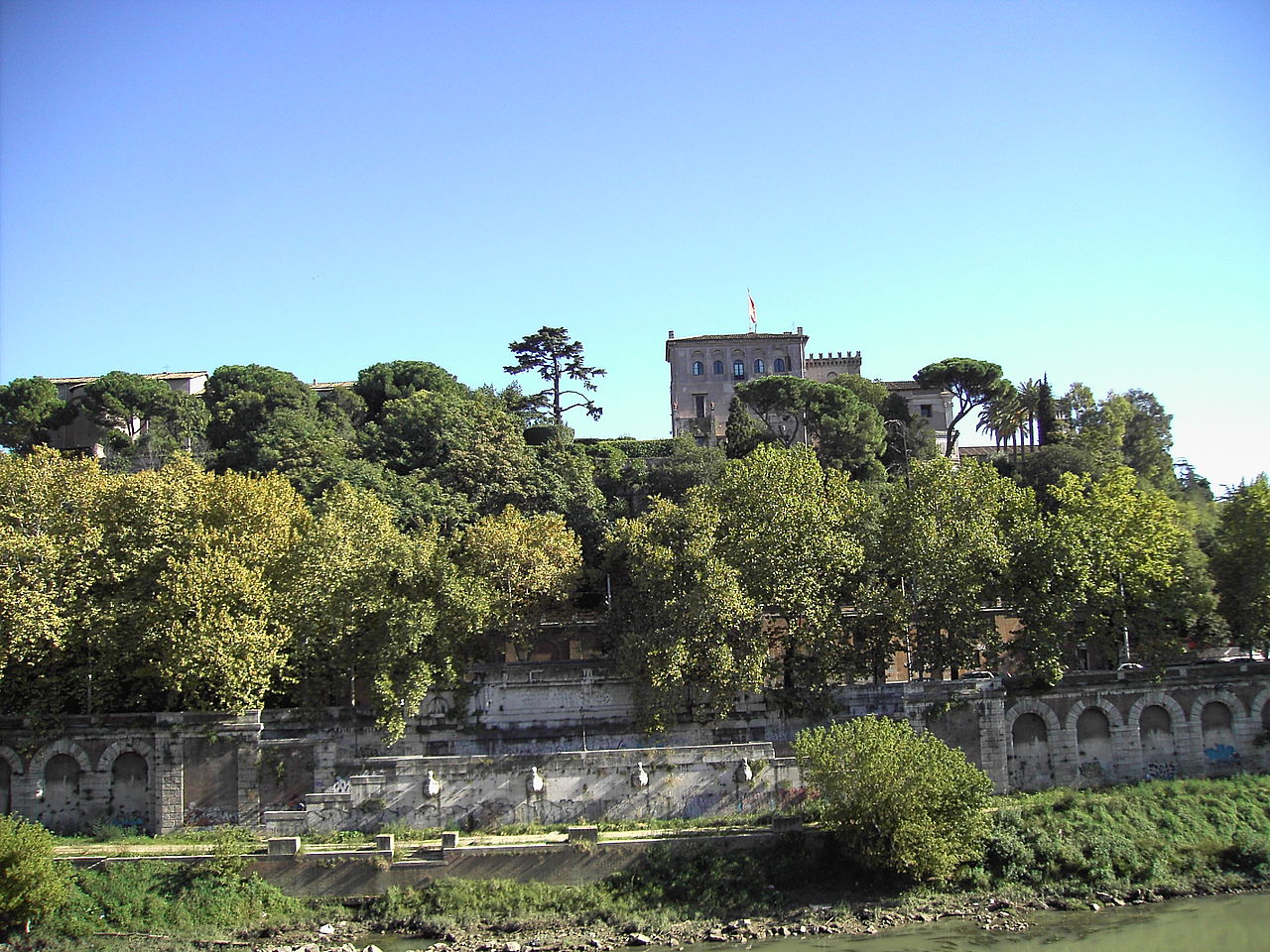
Image: user:Lalupa · Public domain · Wikimedia Commons
The Aventine is one of Rome’s seven hills, the southernmost of them. It rises in two heights divided by a steep cleft that once carried an ancient road. The hill belongs to the modern Ripa district, a quiet ward south of the city centre. Two heights remain, the greater to the northwest and the lesser to the southeast. The road between them is now Viale Aventino, a broad avenue lined with plane trees. In ancient times the hill stood outside Rome’s sacred boundary, the pomerium. Its position made it a place where new peoples and foreign cults entered the city.
The Aventine played a part in Rome’s founding myth. Remus set up his augural tent on the hill while Romulus chose the Palatine. Remus saw fewer auspicious birds and lost the contest. Later the hill became home to temples of Diana, Ceres, Liber and Libera, and Juno Regina. These temples drew plebeian worshippers and kept records for the state. Aristocrats built houses here in the imperial era, including those of Trajan and Hadrian before they became emperors. The hill’s villas and baths were destroyed when Alaric’s troops sacked Rome in 410.
Today the Aventine is an elegant residential quarter with fine architecture and gardens. The basilica of Santa Sabina stands on its crest, its plain brick walls and graceful columns unchanged since the 5th century. Nearby, the church of Santi Bonifacio ed Alessio crowns the lesser height with a sweeping view over the Circus Maximus. The Rome Rose Garden on the hill’s slope offers terraces of blooms and quiet paths among pines. Palaces from the 16th to the 19th centuries line the avenues, their doorways framed by cypresses. From the Aventine’s heights the whole city unfolds below, from the Tiber’s bend to the dome of St Peter’s.
Sources (1)
- Aventine Hill (Wikipedia) (CC BY-SA 4.0, adapted)
Nearby
What lies right next door.

© Desyman · CC BY-SA 4.0 Museums · 4 m
Santa Prisca Mithraeum

© WikiRomaWiki · CC BY-SA 4.0 Landmarks · 51 m
Santa Prisca
Museums · 62 m
Casa Bellezza
Landmarks · 72 m
Temple of Diana

© Pascal Radigue · CC BY-SA 3.0 Landmarks · 83 m
Baths of Decius
Landmarks · 105 m
Temple of Minerva