📷 Image: Wikimedia Commons
Allan Water
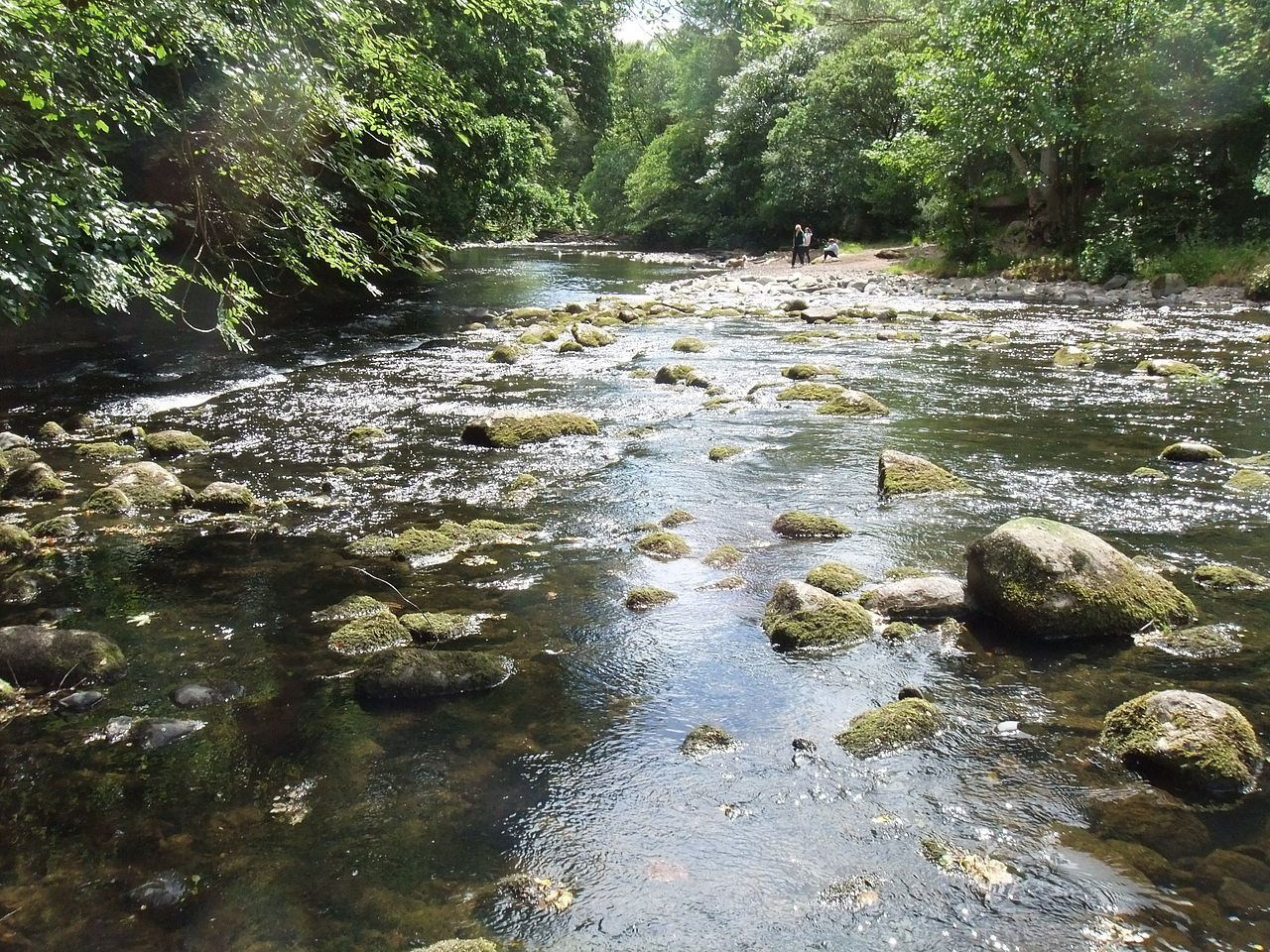
The Allan Water is a river in central Scotland that rises in the Ochil Hills and flows through Strathallan to Dunblane and Bridge of Allan before joining the River Forth. It shares its name with a tributary of the River Teviot and has similar names across Britain and Europe. The river’s name comes from the Indo-European root meaning ‘to flow’ and may once have been linked to a river goddess. Two well-known ballads, one Scottish and one English, tell stories set on its banks. The Scottish ballad praises a woman’s beauty, while the English one tells of a miller’s daughter’s sorrow. The river once powered many mills and factories along its course. Its tributaries like the Muckle Burn and River Knaik mostly ran through sheep-farming land with little industrial use. Downstream, remnants of old mills and weirs remain at places such as Kinbuck, Ashfield and Lower Keir. In Dunblane, two weirs still stand near the old Springbank Mill, now repurposed. At Bridge of Allan, three large weirs once fed several mills, and traces of their channels can still be seen today. Visitors walking along the Allan Water find a mix of quiet countryside and traces of its industrial past. The river’s flow over the weirs at Bridge of Allan remains striking, even though the mills are gone. The landscape around Strathallan offers gentle hills and farmland, while the lower stretches near Dunblane and Bridge of Allan show how the river shaped the area’s history. The water’s movement and the old stone structures tell a story older than the mills and factories.
Opening hours and admission prices change with the season and are therefore not part of this text. Current details from the operator
Discover more in this region
Themes around Schottland
All themes in Schottland →
Nearby
- Stirling Castle2.0 km
- Church of the Holy Rude, Stirling2.4 km
- Stirling Smith Museum and Art Gallery2.6 km
- Macrobert Arts Centre1.7 km
- River Teith1.7 km
- Statue of Henry Campbell-Bannerman2.8 km
QR-Code