Hinterstoder lies in the south of Upper Austria, nestled in a horseshoe-shaped valley of the Dead Mountains. The Steyr River rises in the south and flows through the area from there to the north. The main village sits at an elevation of about 600 metres, while the Großer Priel, at over 2,500 metres, is the highest peak. Roughly two-thirds of the area is forested, with only a few percent used for agriculture. The climate is humid continental with abundant precipitation, especially in summer.
The first written records date back to the 13th century, though the region was shaped by the Bishopric of Bamberg in the Middle Ages. The Stodertal valley long belonged to the Spital am Pyhrn estate, which served pilgrims on their way to Rome. Later, the area was divided between this estate and the princely estate of Klaus. It was only under Emperor Joseph II that an independent parish with a church and school was established, features that still define the village today.
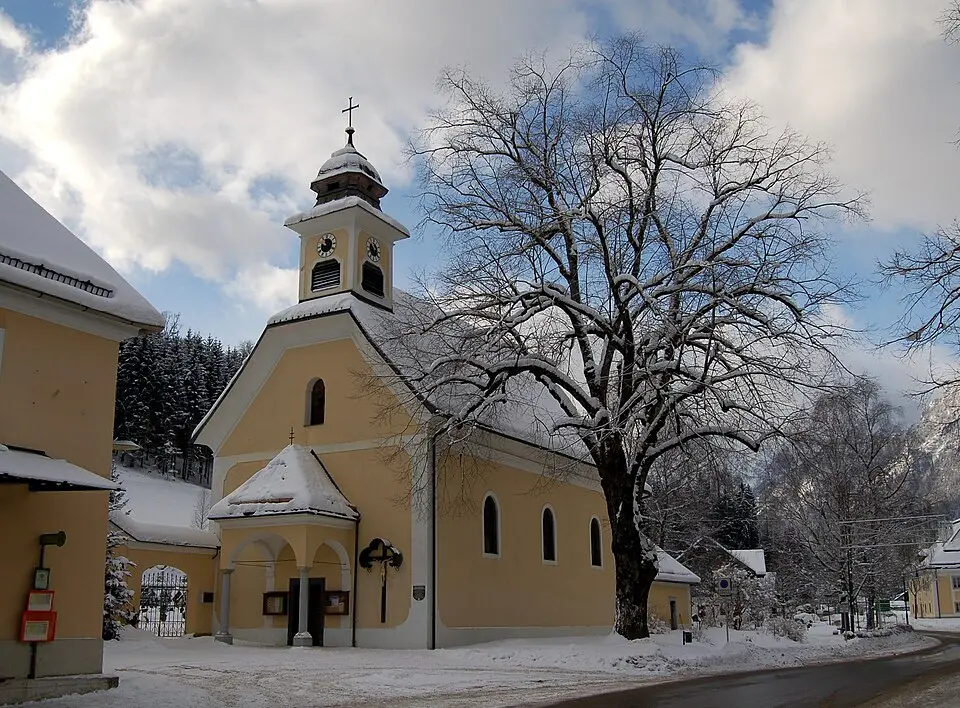
Today Hinterstoder is best known as a winter sports resort, with ski areas such as Bärenalm and Höß. The late Baroque parish church and the historic Jochems Villa recall its past, while village renewal projects have given it a modern appearance. Figures like General Mark W. Clark and Dwight D. Eisenhower once spent their holidays here. Yet nature conservation and tourism continue to clash, as seen recently in the dispute over a planned camping resort.