Image: Georges Jansoone · CC BY 2.5 · Wikimedia Commons
Vindobona
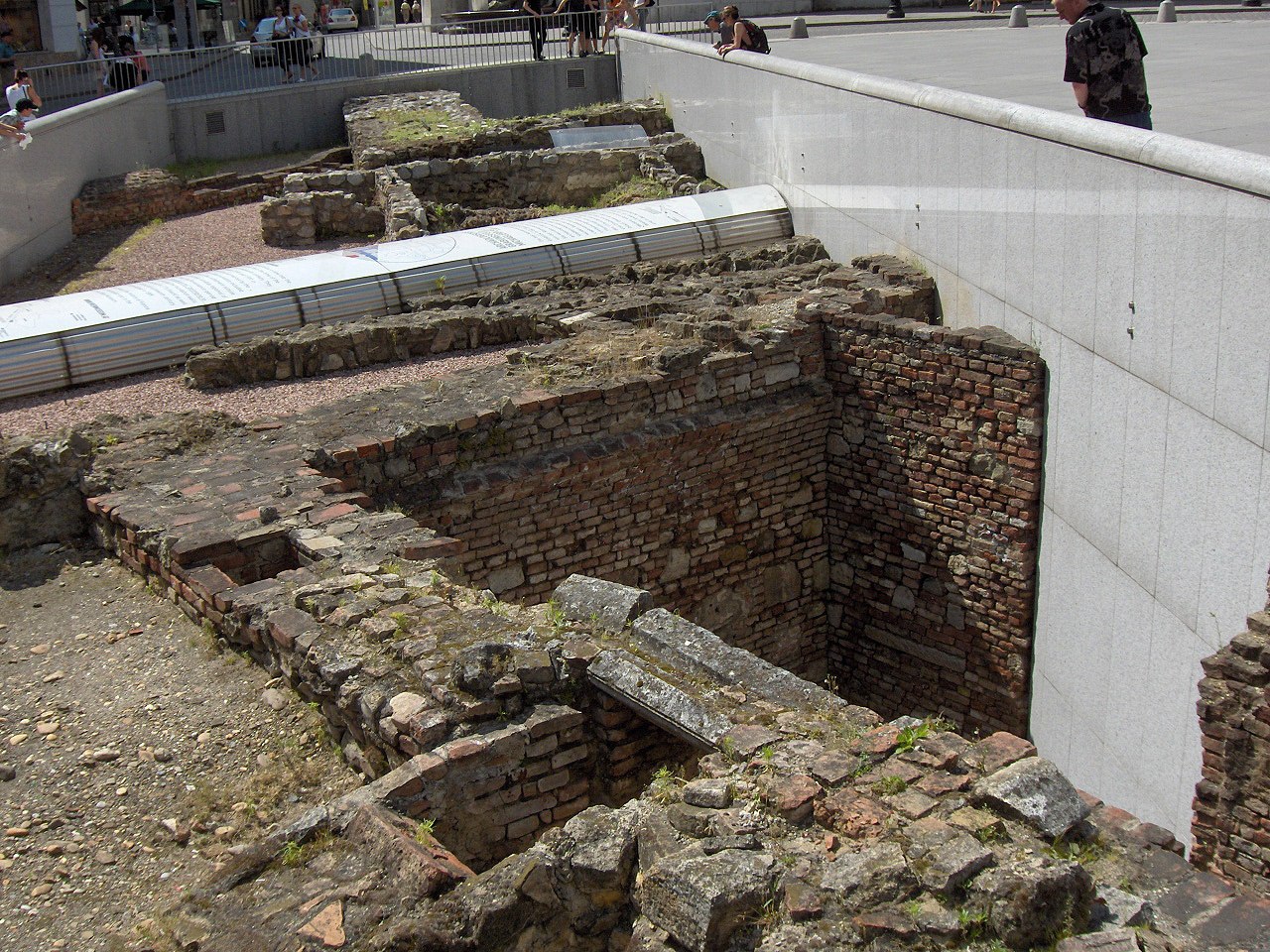
Vindobona was a Roman military camp on the Danube where modern Vienna stands. The Romans chose the spot because the river marked the empire’s northern border. Around the year 100 they built a fort of about twenty hectares for six thousand soldiers. The camp’s unusual shape still shapes streets such as Graben and Naglergasse. After Marcus Aurelius died here in 180, the town grew into a busy provincial centre. The site is worth the journey because it reveals how the Romans organised a frontier fortress. Over three thousand stamped bricks show that Legio X Gemina stayed from 114 until the fifth century. Archaeologists have uncovered officer’s houses with columned halls beneath Hoher Markt. A museum now displays these ruins, while Michaelerplatz marks the site of a crossroads and legionary outpost. Drillings for the U5 line have exposed brick kilns and smelting sites beyond the old walls. Visitors find traces of the camp in the heart of the city. At Hoher Markt a small showroom lets people walk past the remains of two Roman buildings. Michaelerplatz shows a rectangular opening over preserved wall sections. The streets still follow the camp’s odd border, and a 17-kilometre water pipeline once brought clean water from the Vienna Woods. The Danube once carried away the camp’s waste through brick-lined sewers under the main roads.
Opening hours and admission prices change with the season and are therefore not part of this text. Current details from the operator
Discover more in this region
Topics around Vienna


Nearby
- Gedenktafel für Nikolai Sergejewitsch Trubetzkoy (Wien, Kleeblattgasse 4)23 m
- Gedenktafel für Wolfgang Amadeus Mozart (Wien, Judenplatz 3-4)64 m
- Gedenktafel für Alban Berg (Wien, Tuchlauben 8)78 m
- Gedenktafel für Heinrich Franz von Dassanowsky (Wien, Tuchlauben 8)81 m
- Schulhof 4, Vienna58 m
- Statue of Lessing, Judenplatz, Vienna84 m
QR-Code