Landmarks · Langdales
River Duddon

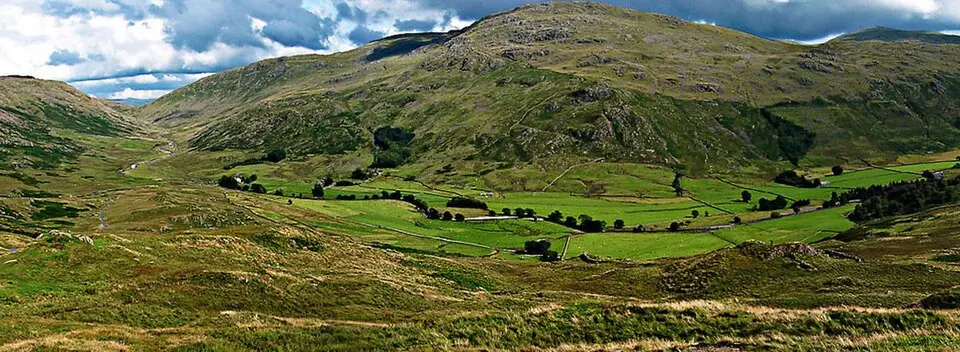
The River Duddon rises high in the Lake District fells near the Three Shire Stone at Wrynose Pass. It flows for 43 kilometres to the Irish Sea at Duddon Sands, marking the boundary between historic Lancashire and Cumberland. The catchment covers part of the south-western Lake District fells, including Corney Fell, Ulpha Fell and Harter Fell. From its source the river drops quickly over two miles to Cockley Beck at the head of Dunnerdale. Near Seathwaite it takes in Tarn Beck from Seathwaite Tarn before turning south-west toward Ulpha Bridge.
The river has inspired poets and writers for centuries. Norman Nicholson called the valley his favourite place, praising its variety and texture. William Wordsworth wrote his lyric sequence "The River Duddon, A Series of Sonnets" between 1804 and 1820, following the river downstream through landmarks like Birks Bridge and Ulpha. Arthur Ransome used the name ‘Dundale’ for the valley in his Lake novels. The Duddon is also known for its salmon fishery and graded canoeing sections.
Visitors find quiet paths along the Duddon Valley away from crowded Lake District spots. The river offers gentle sections for canoeists below Seathwaite and more challenging rapids upstream near Birks Bridge. Turner painted Duddon Sands, now in Tate Britain. The valley attracts day trippers from northern England who value its unfrequented nature.
Sources (1)
- River Duddon (Wikipedia) (CC BY-SA 4.0, adapted)
Nearby