📷 Image: Wikimedia Commons
Scurdie Ness Lighthouse
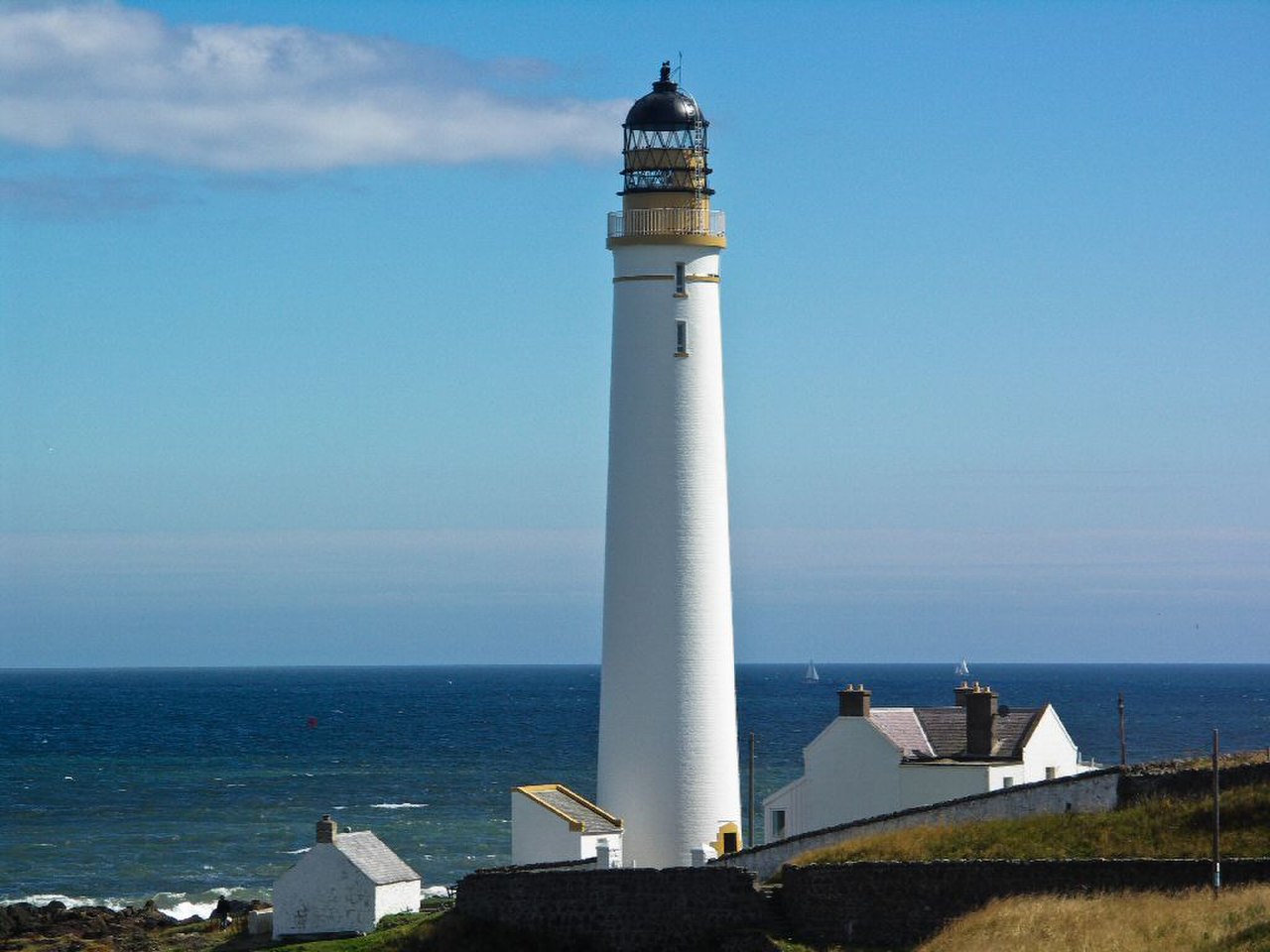
Scurdie Ness is a rocky headland on the southern side of the River South Esk estuary in Montrose, Angus. The name comes from the local word for volcanic rock and the Old Norse word for a headland. The coast from Scurdie Ness to Rickle Craig is protected as a Site of Special Scientific Interest. The river flows from the North Sea into Montrose Harbour and then into the Montrose Basin. The area has also been called Montrose Point or Montroseness. The lighthouse was built in 1870 by the Stevenson engineers David and Thomas Stevenson. Ferryden’s seafaring community had asked for a light to warn of the eleven recorded wrecks near the estuary mouth. During the Second World War the tower was painted black so German bombers could not use it as a landmark. The light was lit only when the Royal Navy requested it. The lighthouse is now automatic and shows three white flashes every twenty seconds, visible for about forty-two kilometres on clear nights. The lighthouse stands on volcanic rock that formed around 410 million years ago. Scurdie Ness is famous for agates formed when silica filled cavities in the lava. These stones can be found in the lava or washed up on the shore and in nearby fields. A display of local agates is held at Montrose Museum. The walk from Ferryden to the lighthouse is popular and often yields sightings of seals and dolphins. Whales, including rare humpbacks, sometimes pass the headland.
Opening hours and admission prices change with the season and are therefore not part of this text. Current details from the operator
Nearby
- River South Esk1.2 km
- Links Park1.9 km
- Lookout Tower, Fishtown Of Usan2.4 km
- Montrose Museum1.9 km
- Montrose Old and St Andrew's Church2.1 km
- Montrose Castle2.4 km
QR-Code