📷 Image: Wikimedia Commons
Workington Opera House
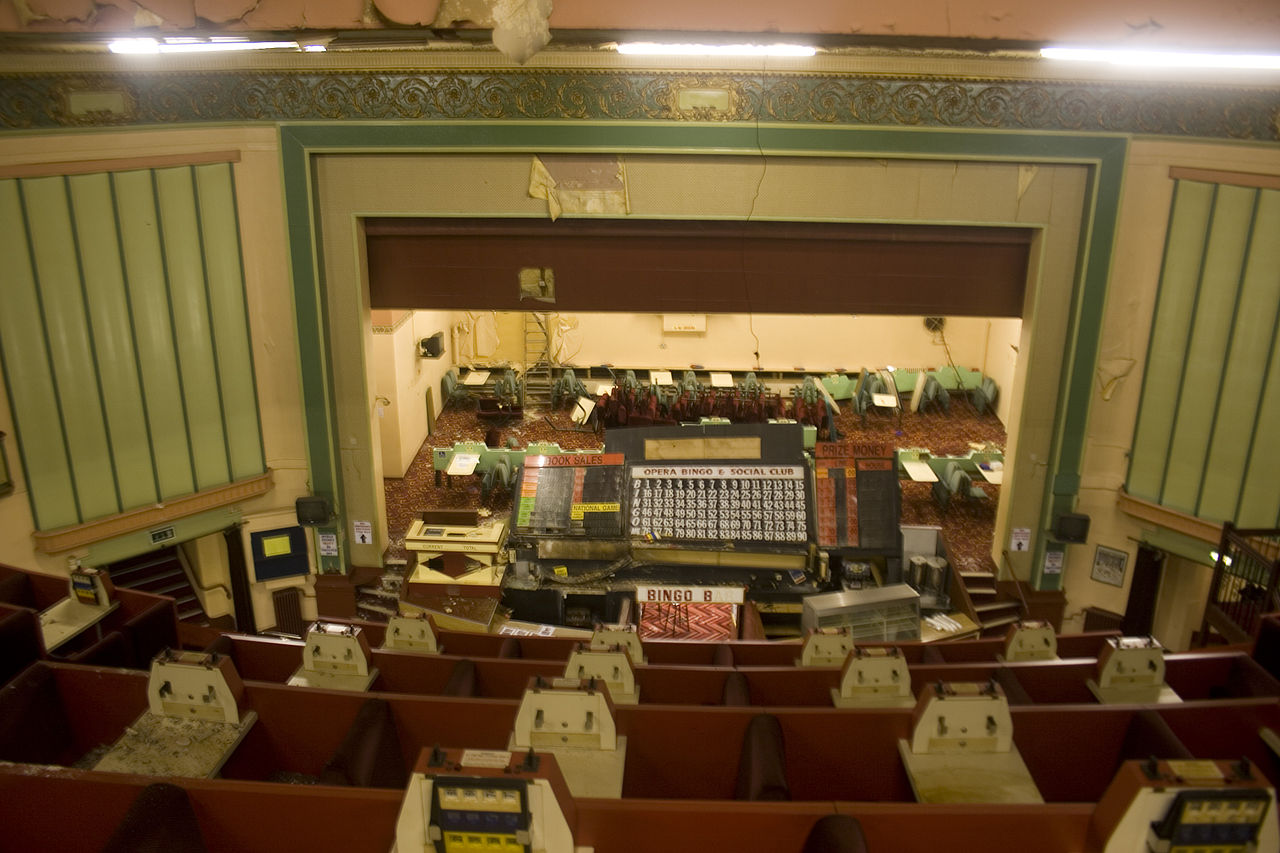
The Workington Opera House stands in Pow Street, Workington, Cumbria. It was built in 1888 as the Queen’s Jubilee Hall & Opera House and designed by T. L. Banks & Townsend. The theatre once seated 1,330 people in a small auditorium with two balconies. A fire in 1927 destroyed the interior, and it was rebuilt with a wider auditorium for 1,200. The stage has a proscenium width of eleven metres and a depth of nine metres, with a grid height of fourteen metres. An orchestra pit once held sixteen musicians. After years as a bingo hall, the building now stands empty. The theatre is worth the journey for its fine sightlines and large stage. Graves (Cumberland) Ltd own the building and plan to replace it with retail and residential units. A group called Save Workington Opera House campaigns to keep it as a civic theatre for the town. The stage’s dimensions and the orchestra pit show its original purpose. The building’s history includes an explosion in the late 19th century and a fire in the 1920s. Its Grade not listed status reflects its architectural importance but not legal protection. Visitors find a grand but empty auditorium with ornamental ceilings. The wide stage and good sightlines remain from the 1930 rebuild. The façade was rebuilt in the 1960s, altering its appearance. The orchestra pit and stage dimensions hint at past performances. The empty building now waits for a decision on its future. The Save Workington Opera House group continues to argue for its revival. The town’s cultural heritage hangs in the balance.
Opening hours and admission prices change with the season and are therefore not part of this text. Current details from the operator
Nearby
- Tower And Adjoining Maltings At Workington Brewery81 m
- Theatre Royal, Workington181 m
- Carnegie Theatre and Arts Centre282 m
- Workington316 m
- Helena Thompson Museum468 m
- Workington Transport Heritage Trust918 m
QR-Code