📷 Image: Wikimedia Commons
Flitwick Castle
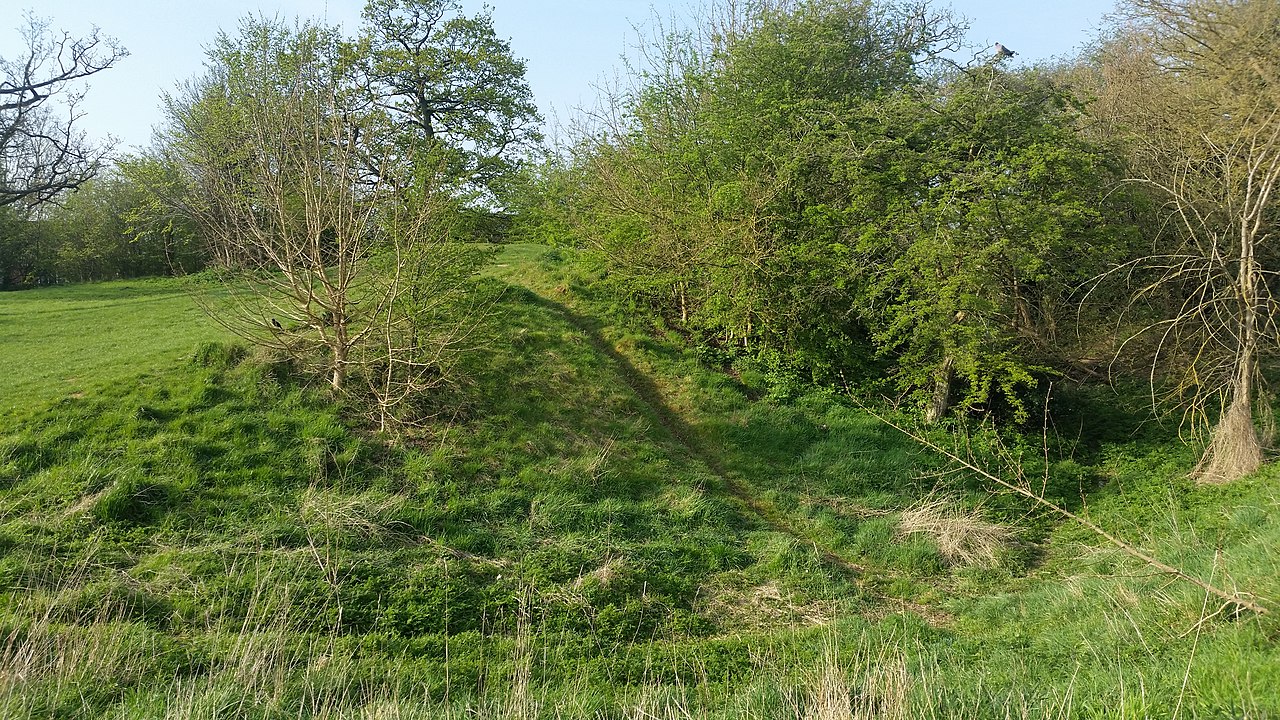
Flitwick Castle stands in the Bedfordshire town of Flitwick as the last trace of an 11th-century timber motte-and-bailey fortress. Its single earth mound rises beside a quiet green called Temple Field, once surrounded by a deep moat. The Domesday Book of 1086 records the castle under William Lovet, a Norman who had taken the land from its Saxon owner Alwin. Lovet’s arrival marks the moment when Norman rule replaced Saxon estates across the region. The surviving earthworks reach about seven metres high and remain a Scheduled Monument. The name Temple Field comes from the nearby church, not from any religious building on the mound. The ditches that once defended the castle have long since been filled in, leaving only the grassy mound and a sense of the past. Visitors find a modest grassy hill in a public park, with wide paths winding around the mound. The site offers a quiet spot to stand above the town and imagine the wooden tower that once crowned the earthworks. From the top there are views over Flitwick’s rooftops and the surrounding countryside. The absence of modern intrusions lets the shape of the old castle stand clear in the landscape.
Opening hours and admission prices change with the season and are therefore not part of this text. Current details from the operator
Nearby
- Church of St Peter & St Paul, Flitwick196 m
- Flitwick899 m
- Wood End moated site, Tingrith2.3 km
- Flitwick Moor2.2 km
- Cooper's Hill3.4 km
- Flitton and Greenfield2.2 km
QR-Code