📷 Image: Wikimedia Commons
Newport Castle
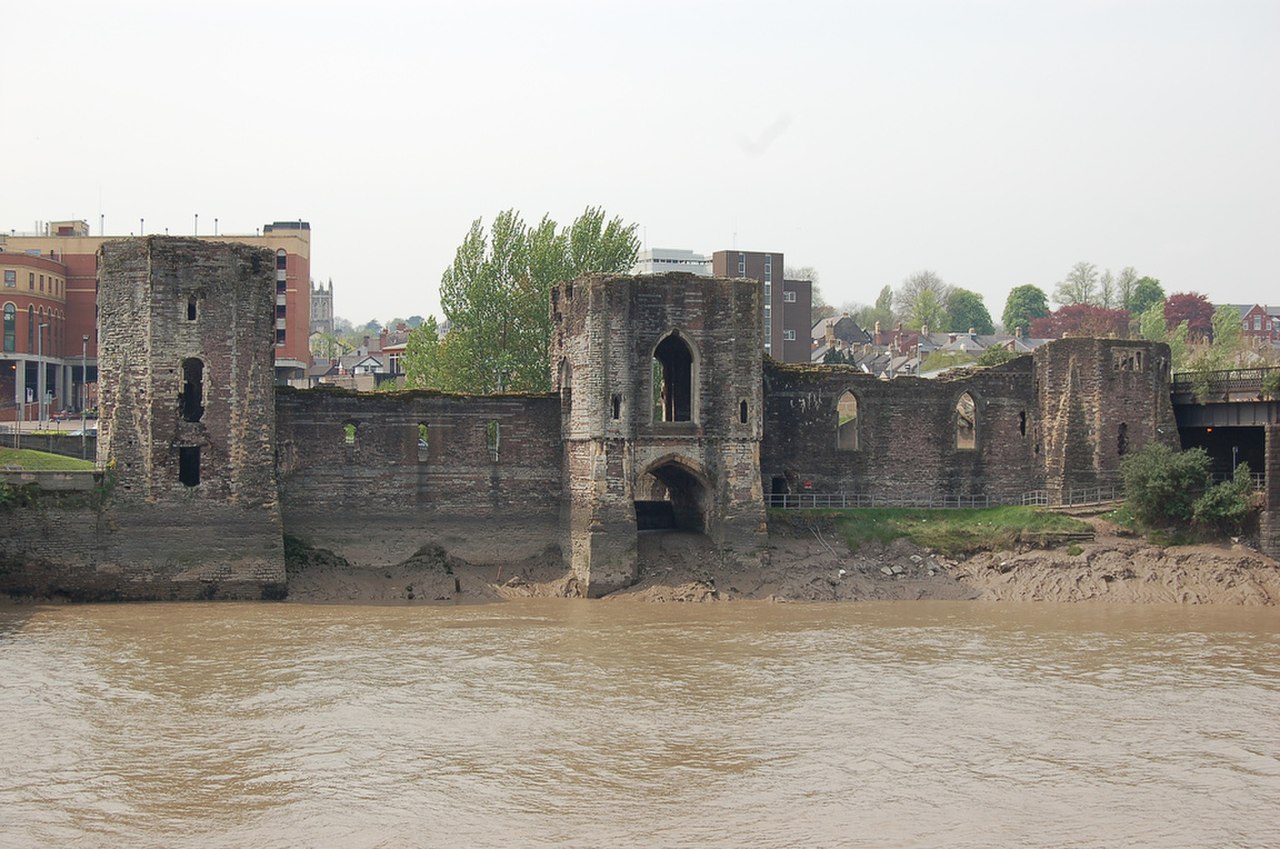
Newport Castle stands on Stow Hill in the Welsh city of Newport, beside the River Usk between the Newport Bridge and the railway bridge. Built in the 14th century, probably by Hugh de Audley or Ralph, Earl of Stafford, it once managed the river crossing and collected rents from local tenants. The castle was sacked by Owain Glyndŵr in 1402 and later taken by Oliver Cromwell’s forces during the Civil War. By the 18th century it had fallen into disrepair and parts were used as a tannery and brewery. Today only the east side survives, a Grade II* listed ruin fenced off for safety. Historians such as Jeremy Knight date the surviving castle to between 1327 and 1386, with a coin from Edward III’s reign found during an 1845 excavation. Architectural historian John Newman highlights its T-shaped room above the watergate as a remarkable ceremonial space. The castle’s polygonal towers and vaulted audience chamber once dominated the town and river trade. Owen Tudor was imprisoned here in 1460, and Humphrey Stafford added luxurious apartments in the 15th century. A 1750 town map and an 1885 Archaeologia Cambrensis plan record its layout. Visitors find the remaining east wall of the castle, built of Old Red Sandstone and grey limestone. The surviving structure includes two polygonal towers and fragments of the central tower’s watergate. The site once held a great hall, kitchen, gallery and lordly chambers, but these have vanished. The river-facing walls still show the castle’s original river-oriented design. Beyond the ruins, the River Usk and nearby bridges frame the view. Though fenced off, the castle remains a quiet reminder of Newport’s medieval past.
Opening hours and admission prices change with the season and are therefore not part of this text. Current details from the operator
Nearby
- Newport Medieval Ship282 m
- The Riverfront286 m
- Newport329 m
- Newport Museum and Art Gallery556 m
- Rodney Parade570 m
- Newport Cathedral891 m
QR-Code