📷 Image: Wikimedia Commons
Isca Dumnoniorum
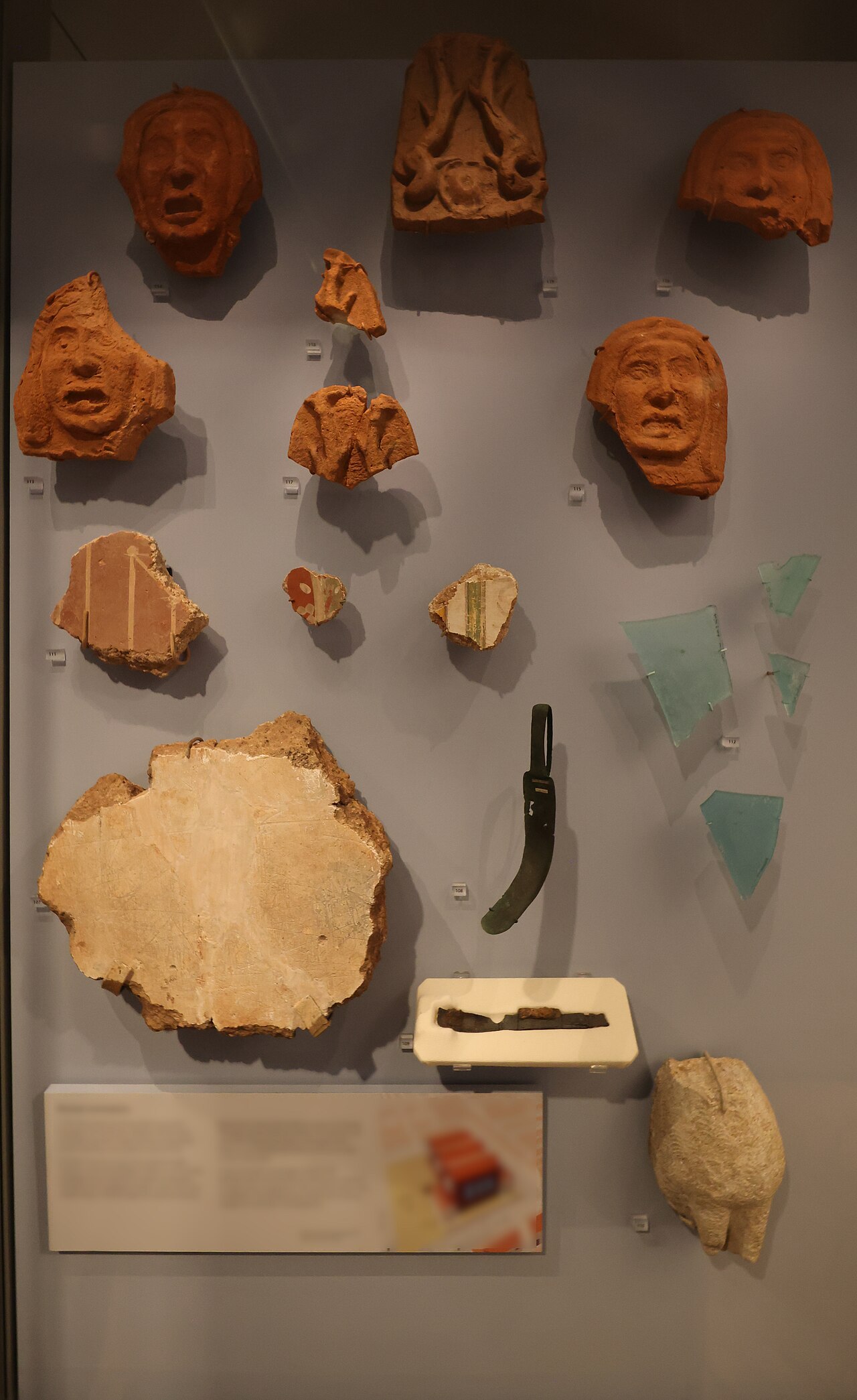
Isca Dumnoniorum was a Roman legionary fortress built around AD 55 for the Second Augustan Legion on the site of present-day Exeter. The fortress covered 42 acres and was shaped like a playing card. It stood beside the River Exe, which the Romans called Isca, meaning ‘full of fish’. The fortress became the tribal capital of the Dumnonii, one of Britain’s Iron Age peoples. After the legion moved to Caerleon in Wales, the site grew into a civilian settlement. Exeter’s surviving city walls still follow the line of the Roman defences. The fortress housed five thousand soldiers and their families, with timber barracks, granaries and workshops. A stone military bathhouse supplied by a natural spring and aqueduct was uncovered in the 1970s. Finds include a dolphin roof tile matching one from Caerleon, dated about AD 60. A smaller bathhouse and forum were later built on the same site. Artefacts from the digs are displayed at Exeter’s Royal Albert Memorial Museum. Visitors can walk parts of the Roman walls that still form the core of Exeter’s medieval defences. The lower courses of the walls mark the fortress perimeter, and traces of the bathhouse survive beneath the city. The river Exe remains central to the city, its name echoing the ancient settlement. Excavations have also revealed a supply depot and another fort nearby. The remains offer a glimpse of Exeter’s origins as a Roman military and trading centre.
Opening hours and admission prices change with the season and are therefore not part of this text. Current details from the operator
Discover more in this region
Themes around England
All themes in England →
Nearby
- Exeter0 m
- St Olave's Church34 m
- St Mary Arches Church35 m
- Parliament Street172 m
- Church of St Mary Steps239 m
- Hall of the Vicars Choral, South Street159 m
QR-Code