Sights in Toruń

133 sights in one place.
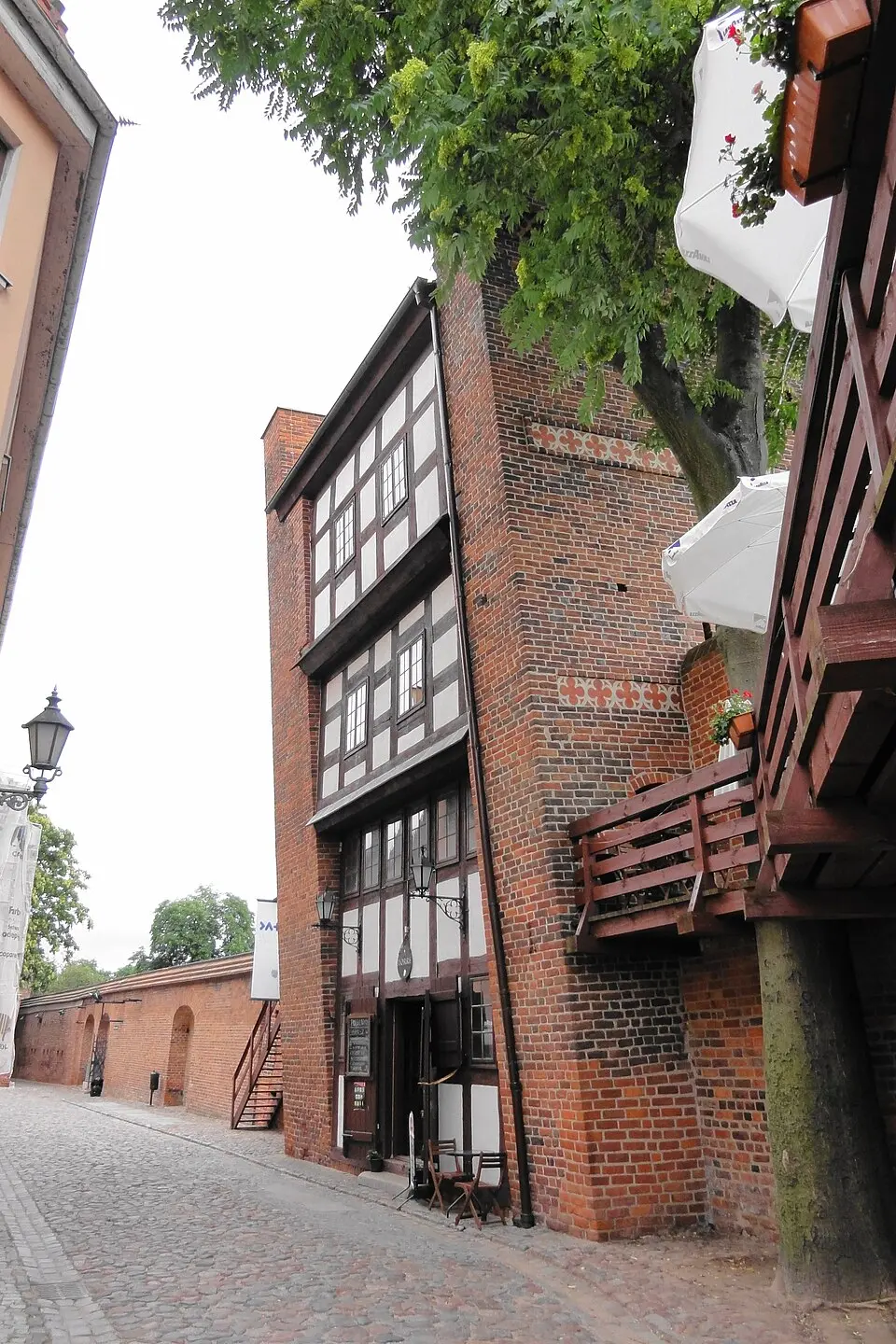
Schiefer Turm von Thorn
Jarosław Baranowski CC BY-SA 3.0

Sights in Toruń

133 · Page 1 of 6
Medieval Town of Toruń
Toruń Cathedral
Leaning Tower of Toruń
Institute of Astronomy
Toruń Castle
Nicolaus Copernicus native house in Toruń
Convent Gate
Nicolaus Copernicus Monument in Toruń
Crane Tower in Toruń
House Under the Star in Toruń
Toruń Fortress
Tuba Dei

On the map

Toruń lies in the Chełmno Land on the broad valley of the navigable Vistula, surrounded by extensive forests, especially to the southwest. The city extends over 115 square kilometres on both sides of the river and stretches up to 17.5 kilometres from east to west.

It is one of the two main cities of the Kuyavian-Pomeranian Voivodeship and the seat of important regional authorities.

Its origins go back to a Slavic fortress from the 9th to 13th centuries, which later came under Polish rule. In 1231 the Teutonic Order founded the first settlement of Thorn, which was moved to its present site in 1236 because of flooding. In 1233 it received town rights through the Chełmno Charter and became an important trading place. In the 14th century Thorn joined the Hanseatic League and played a central role in the conflicts between the Order and Poland.

Toruń’s medieval cityscape is shaped by brick Gothic architecture, and the Old Town is part of the UNESCO World Heritage. The city’s most famous son is Nicolaus Copernicus, who was born here. The University of Toruń and the Roman Catholic diocese have their seat in the city.

Sources (1)

Facts & figures

Population
198,273
Area
115,75 km²
Elevation
59 m
District
województwo kujawsko-pomorskie
Website
torun.pl

Also nearby