📷 Image: Wikimedia Commons
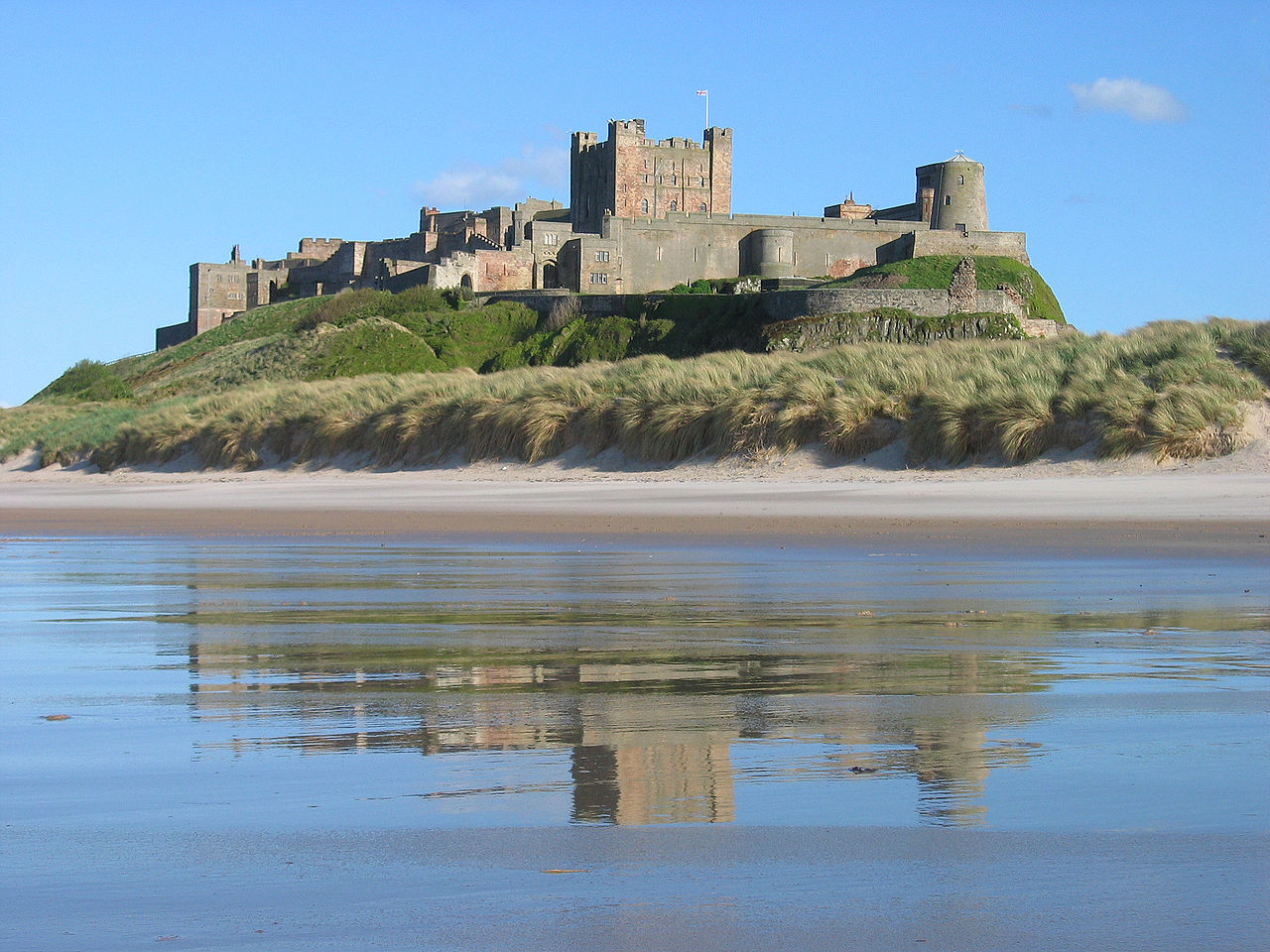
Bamburgh Castle
Bamburgh Castle stands on a black crag of volcanic rock above the Northumberland coast. The site began as Din Guarie, a Celtic fort that may have been the capital of Bernicia in the 5th and 6th centuries. Anglo-Saxons captured it in 547 under King Ida and rebuilt it as Bebbanburh. The Normans constructed a new castle in stone, parts of which remain today. After a siege in 1095 it became a royal fortress. Henry II added the keep by 1164, and Richard I appointed Sir John Forster as its first governor. The castle’s long history includes sieges, battles and royal prisoners. Richard Neville, the Earl of Warwick, used artillery to take it in 1464, the first British castle to fall to gunfire. Financial decline in the 17th century left it ruinous until the 18th and 19th centuries brought restorations. William Armstrong, the Victorian industrialist, completed the work in the 1890s. The Armstrong family still owns the castle, which is open to visitors. Inside, visitors see the restored keep and court rooms, furnished with medieval and later pieces. The laundry rooms house the Armstrong and Aviation Artefacts Museum, with engines, weapons and aircraft from two world wars. Outside, the Bowl Hole burial ground has yielded 120 graves from the 7th and 8th centuries, now reburied in St Aidan’s Church crypt. Beyond the castle walls, the Farne Islands host terns and puffins, while Dunstanburgh and Lindisfarne castles lie nearby along the coast.
Opening hours and admission prices change with the season and are therefore not part of this text. Current details from the operator
Discover more in this region
Themes around England
All themes in England →
Nearby
- Bamburgh Castle Aviation Artefacts Museum42 m
- St Aidan's Church, Bamburgh481 m
- RNLI Grace Darling Museum525 m
- Monument To Grace Darling Circa 30 Yards West Of Church Of St Aidan542 m
- Bamburgh Lighthouse1.2 km
- Glororum2.2 km
QR-Code