📷 Image: Wikimedia Commons
Dichtergarten
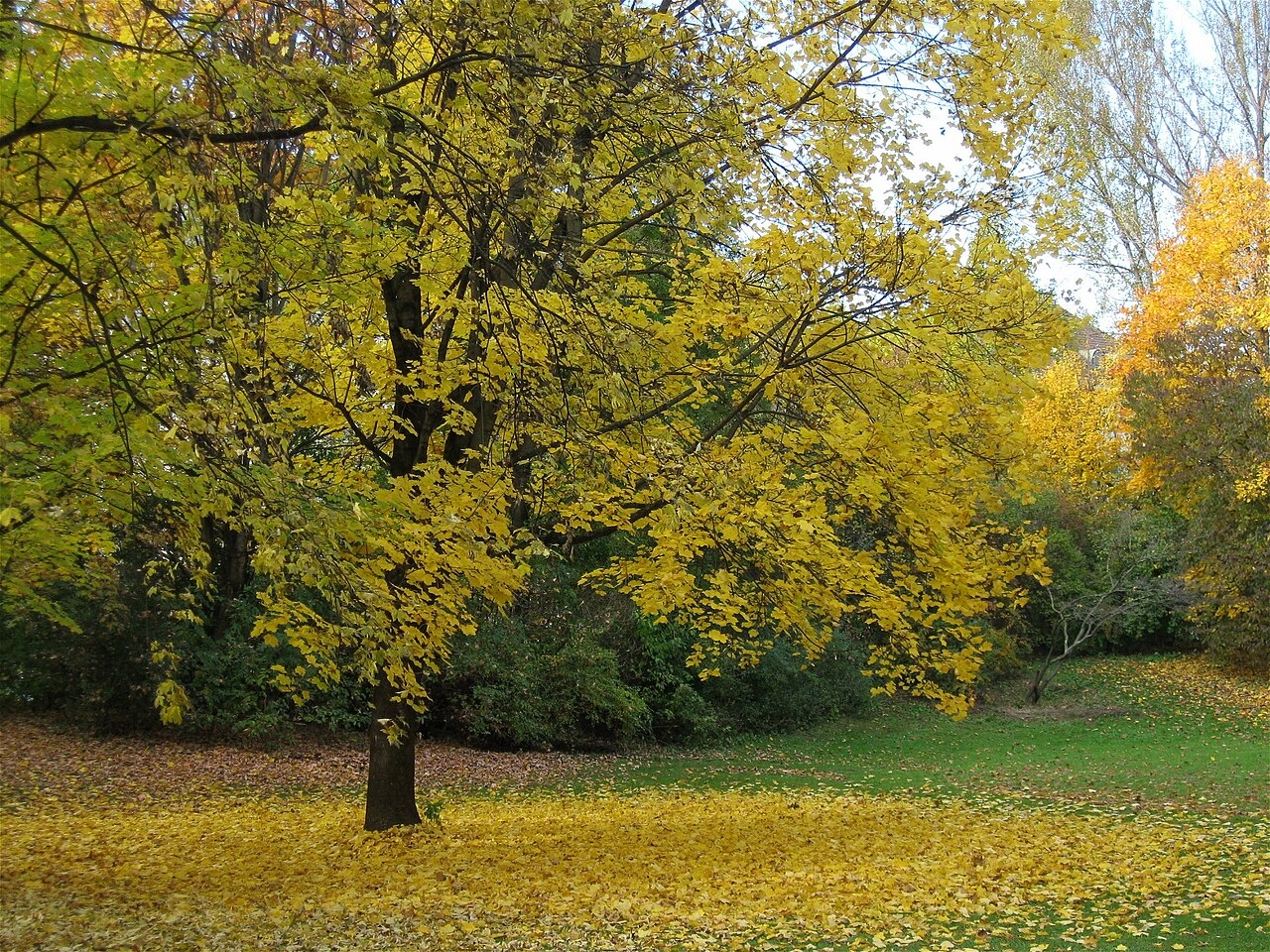
The Finanzgarten is a two-hectare green space in central Munich, squeezed between the Hofgarten and the Englischer Garten. It sits on the remains of a bastion built during the Thirty Years’ War, giving it a raised mound that rises about seven metres above the surrounding ground. The land belongs to the Free State of Bavaria and is cared for by the Bavarian Administration of State Castles, Gardens and Lakes. The garden’s trees form a loose canopy over paths that wind through its quiet slopes. The site’s history explains why it matters. After the war the bastion was no longer needed for defence and was handed to a monastery in 1665. Later an abbé bought the land and laid out a private garden with a pavilion, a grotto and a small canal called the Palaisbächl. In 1807 King Max I Joseph bought the garden so it could link the Hofgarten with the Englischer Garten, though it stayed closed to the public for decades. The name Finanzgarten comes from its later use by the finance ministry in the 19th century. Today the Finanzgarten is a small public park with two distinct levels. The lower part holds a round pond fed by the Köglmühlbach, its water pushed into a modest jet by a fountain. A low fence surrounds the private garden of the Prinz-Carl-Palais, which is only opened for official visitors. Beyond it the ground climbs gently to the old bastion, where beech and lime trees stand above a tangle of undergrowth. The whole space is quiet, a brief green pause between two of Munich’s busiest parks.
Opening hours and admission prices change with the season and are therefore not part of this text. Current details from the operator
Discover more in this region
Themes around Bavaria


Nearby
- Harmlos67 m
- Prinz-Carl-Palais102 m
- Deutsches Theatermuseum118 m
- Kriegerdenkmal im Hofgarten174 m
- Bavarian Hauptstaatsarchiv184 m
- Reiterstandbild Ottos I.183 m
QR-Code