📷 Image: Wikimedia Commons
A4 road
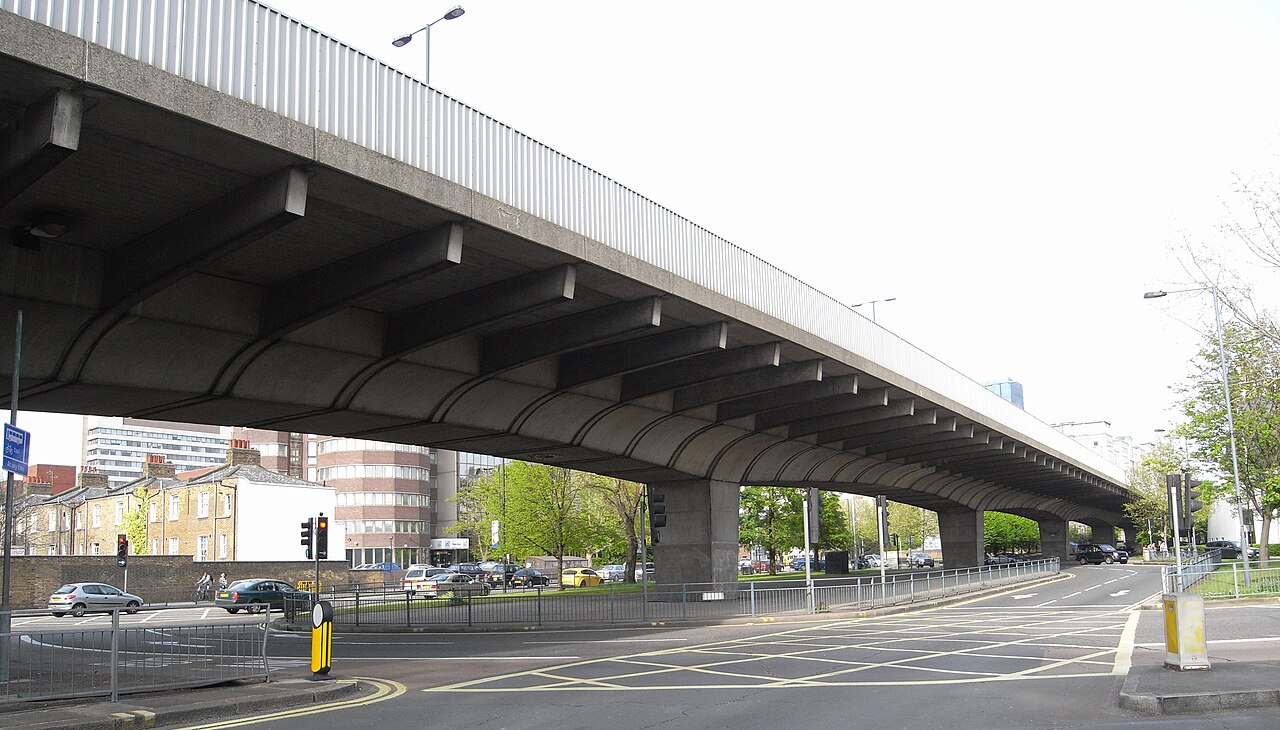
The A4 is a historic road running from central London to Avonmouth, passing through key cities such as Reading, Bath and Bristol. It follows much of the route of the old Bath Road, which once linked London with the west of England. Sections of the modern A4 include the Great West Road and Portway, built to improve travel between major towns. Before the M4 motorway took most of the traffic, the A4 carried all non-motorway journeys from Bristol to London. Parts of the route follow ancient tracks, including Roman roads near Silbury Hill in Wiltshire. The road has been shaped by centuries of use, from medieval market routes to turnpike trusts in the 17th and 18th centuries. Tollhouses once stood at places like Maidenhead and Thatcham, collecting fees to maintain the surface. By the 1820s, improved surveying made the road smoother for wealthy travellers heading to Bath’s spa. Coaching services flourished in the early 19th century, with up to ten stagecoaches a day running between London and Bristol. The arrival of the Great Western Railway in the 1840s soon ended most of this traffic. Today the A4 still carries local traffic between towns in Wiltshire and beyond. Near Marlborough it passes through Savernake Forest, where a medieval route once linked towns to market centres. The road’s alignment has shifted over time, sometimes avoiding steep hills or poor ground like London Clay near Kensington. In Wiltshire the A4 runs through open countryside and small towns that once depended on coaching inns and tollgates. Though the M4 now carries most long-distance traffic, the A4 remains a living link to England’s road history.
Opening hours and admission prices change with the season and are therefore not part of this text. Current details from the operator
Discover more in this region
Themes around England
All themes in England →
Nearby
- Church of St Andrew82 m
- St Etheldreda's Church124 m
- City Temple125 m
- Gresham College146 m
- London Museum204 m
- Fleet Prison250 m
QR-Code