📷 Image: Wikimedia Commons
London Underground
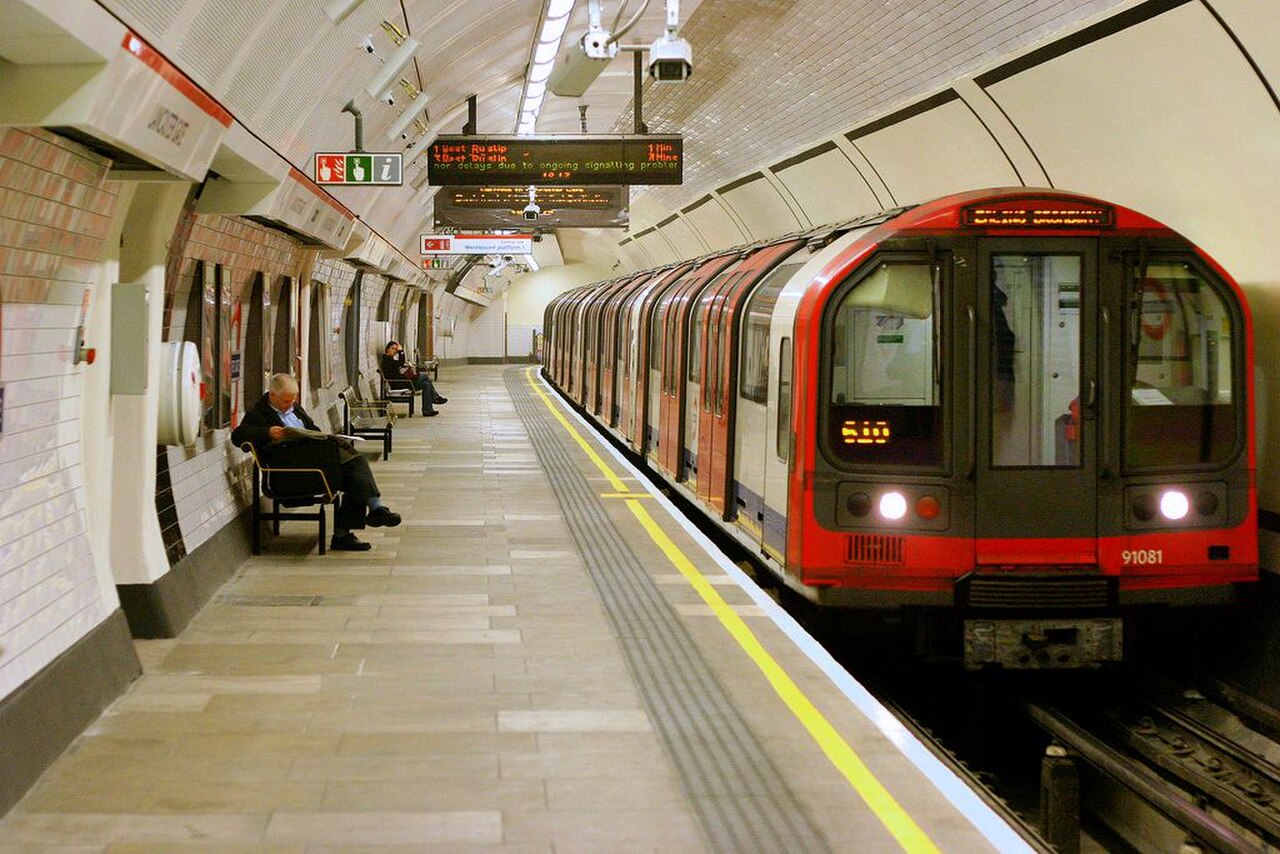
The London Underground is a rapid transit system serving Greater London and parts of Buckinghamshire, Essex and Hertfordshire. It spans 11 lines and 400 kilometres of track, serving 272 stations. Though called the Tube, only 45 per cent of the network is underground, with most outer tracks north of the Thames. It carries over 1.2 billion passenger journeys each year, making it one of the busiest systems in the world. The network began in 1863 with the Metropolitan Railway, the first underground passenger railway. Early lines used steam locomotives in gas-lit wooden carriages, replaced later by electric traction. The Underground’s design legacy includes Edward Johnston’s 1916 Johnston typeface and Harry Beck’s 1931 Tube map, both now global icons. The roundel logo and modernist station architecture date from the mid-20th century. The system runs on a unique four-rail DC network and has introduced advanced signalling and Night Tube services. Safety reforms followed the 1987 King’s Cross fire, and ticketing evolved from Travelcard and Oyster to contactless payments in 2014. Visitors notice the contrast between deep-level tube tunnels and sub-surface cut-and-cover routes. Stations display a mix of historic and modern architecture, from Victorian brick to contemporary glass. The network’s influence extends beyond transport, shaping graphic design and urban wayfinding. Its history is visible in the names of lines and stations, each reflecting past routes and expansions. The system remains a daily necessity for Londoners and a point of interest for travellers.
Opening hours and admission prices change with the season and are therefore not part of this text. Current details from the operator
Discover more in this region
Themes around England
All themes in England →
Nearby
- Newington Butts19 m
- Strata SE177 m
- Metropolitan Tabernacle156 m
- London College of Communication191 m
- Newington Butts Theatre244 m
- Elephant and Castle248 m
QR-Code