📷 Image: Wikimedia Commons
Caerphilly Castle
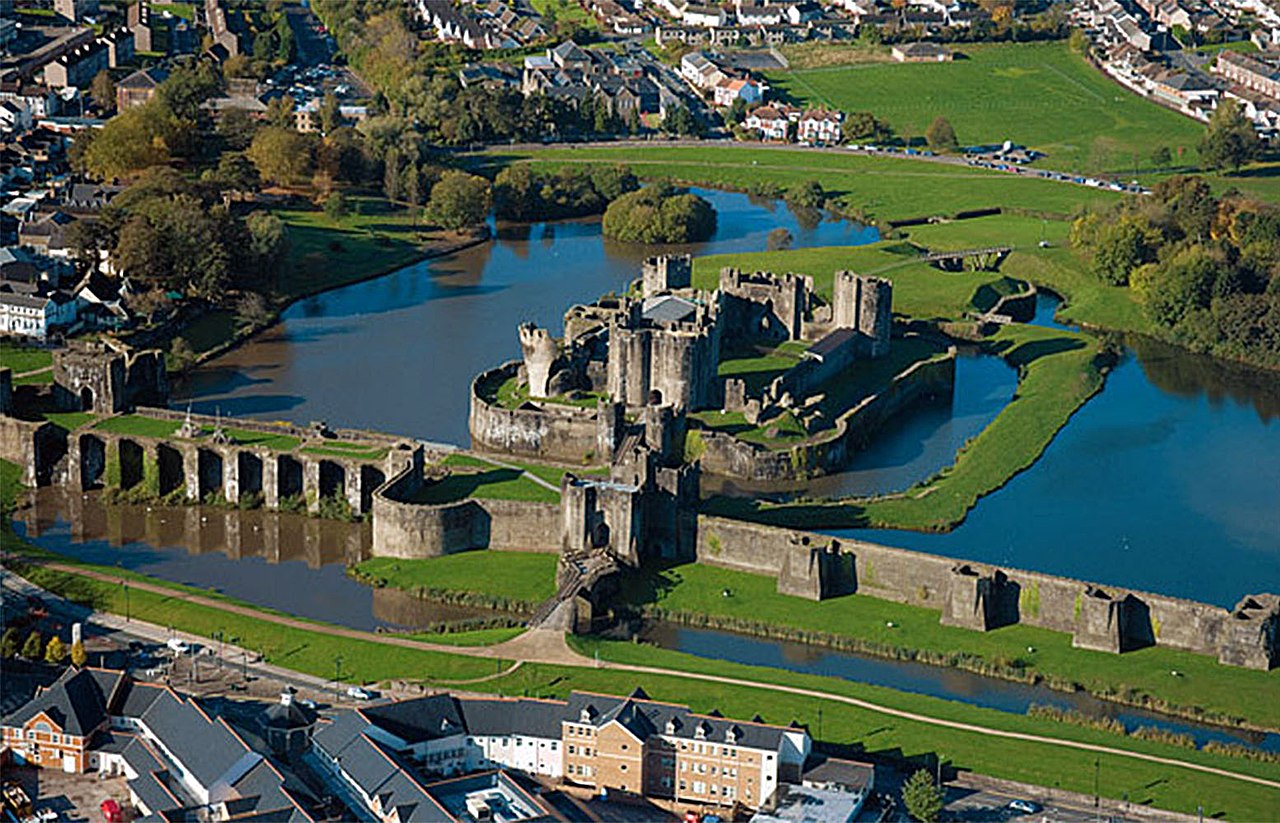
Caerphilly Castle stands on a low-lying plain beside the Rhymney River in South Wales. Built in the late 13th century by Gilbert de Clare, it occupies about twelve hectares and is the largest castle in Wales. The site includes massive artificial lakes that once formed the most elaborate water defences in Britain. Two great gatehouses guard the entrance, and the castle’s concentric walls introduced a new style of fortification to these islands. The inner stronghold was placed on a central island, surrounded by water on all sides for extra protection. The castle’s history is marked by fierce struggles between Norman lords and Welsh princes. Gilbert de Clare began work in 1268, but the Welsh leader Llywelyn ap Gruffudd burned the half-built site two years later. Despite setbacks, the castle was completed and became a symbol of Norman control. Later, in 1294, local Welsh forces attacked but failed to capture it. The concentric design later influenced Edward I’s castles in North Wales, changing castle building across Britain. Visitors today walk over the massive stone walls and through the grand gatehouses. The central island still lies within its flooded defences, offering views across the water. Inside, remains of halls and towers show where Gilbert’s household lived. The outer walls enclose a wide courtyard where markets once stood beside the castle. Beyond the gate, the town of Caerphilly grew up to the south, linked to the fortress by old roads.
Opening hours and admission prices change with the season and are therefore not part of this text. Current details from the operator
Nearby
- Caerphilly Town Defences180 m
- Caerphilly270 m
- Caerphilly366 m
- Van House1.1 km
- Caerffili Mountain Shaft Mounds2.0 km
- Penyrheol, Trecenydd and Energlyn1.8 km
QR-Code