📷 Image: Wikimedia Commons
Warwick Castle
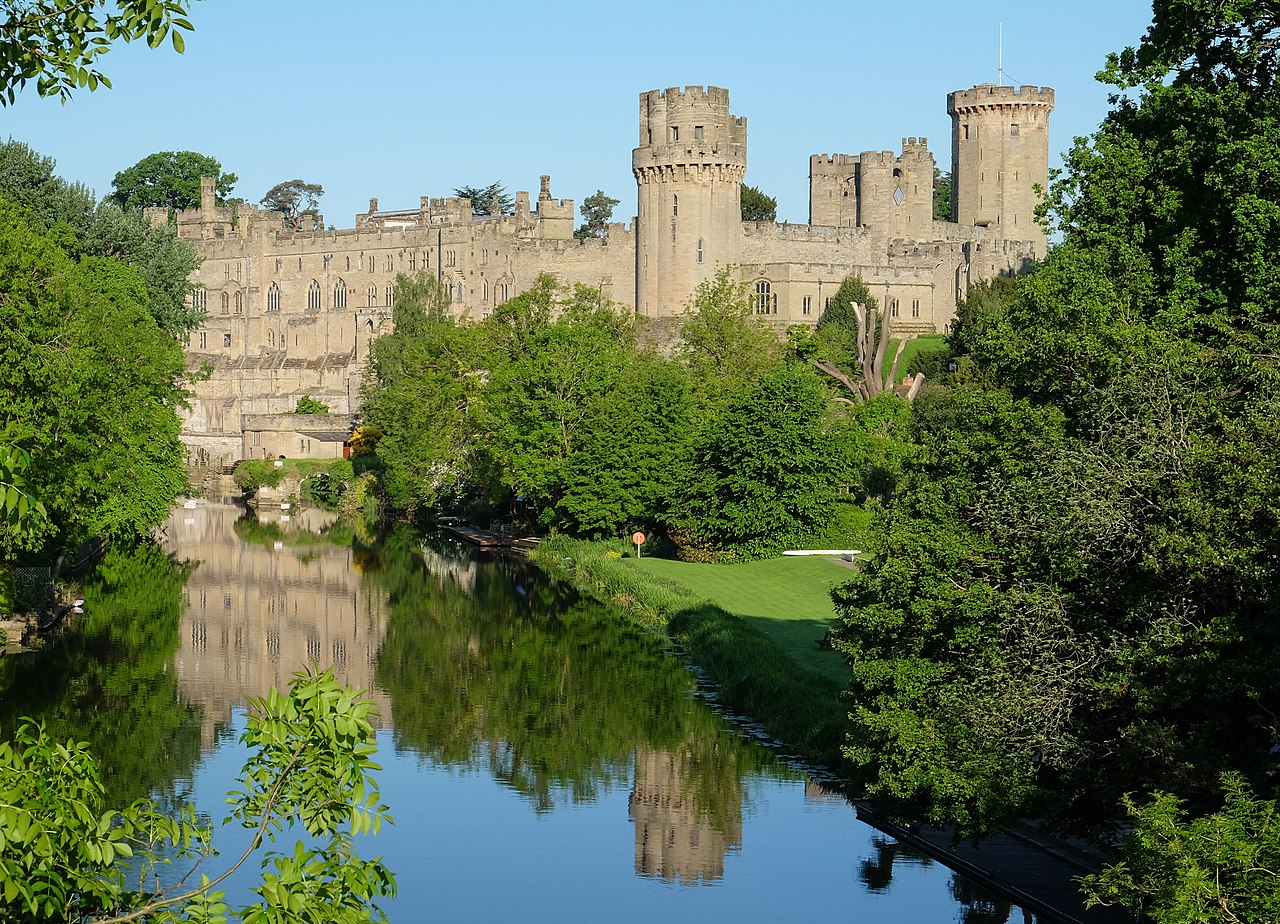
Warwick Castle stands on a sandstone bluff above a bend in the River Avon, in the town of Warwick. The river has carved a cliff on the east side, giving the castle natural defences. It began as a wooden fort built by William the Conqueror in 1068. By the 12th century the wooden walls were replaced with stone. During the Hundred Years War the river-side facade was strengthened, creating one of the clearest examples of 14th-century military architecture. The castle’s position made it vital for controlling the Midlands. In 1088 Henry de Beaumont became the first Earl of Warwick and built the Church of All Saints inside the walls. The Beauchamp earls later added Caesar’s Tower and Guy’s Tower, each with machicolations and stone vaults. The gatehouse has murder holes, drawbridges and portcullises, while the riverside front was more a display of power than a purely military work. Visitors walk through the gatehouse with its two towers and cross the surviving drawbridge. Inside, Caesar’s and Guy’s Towers still contain residential chambers and vaulted rooms. The cliff above the Avon offers wide views across the river valley. Across the water stands Warwick School, founded in Anglo-Saxon times and still operating today. The castle’s stone walls and towers show how medieval builders turned a natural bluff into a stronghold and later a grand house.
Opening hours and admission prices change with the season and are therefore not part of this text. Current details from the operator
Discover more in this region
Themes around England
All themes in England →
Nearby
- Warwick Doll Museum163 m
- East Gate303 m
- East Gate and St Peter's Chapel, and the attached section of town wall303 m
- Site of St Mary's College362 m
- Collegiate Church of St Mary, Warwick344 m
- Warwick303 m
QR-Code