📷 Image: Wikimedia Commons
Thames Tunnel
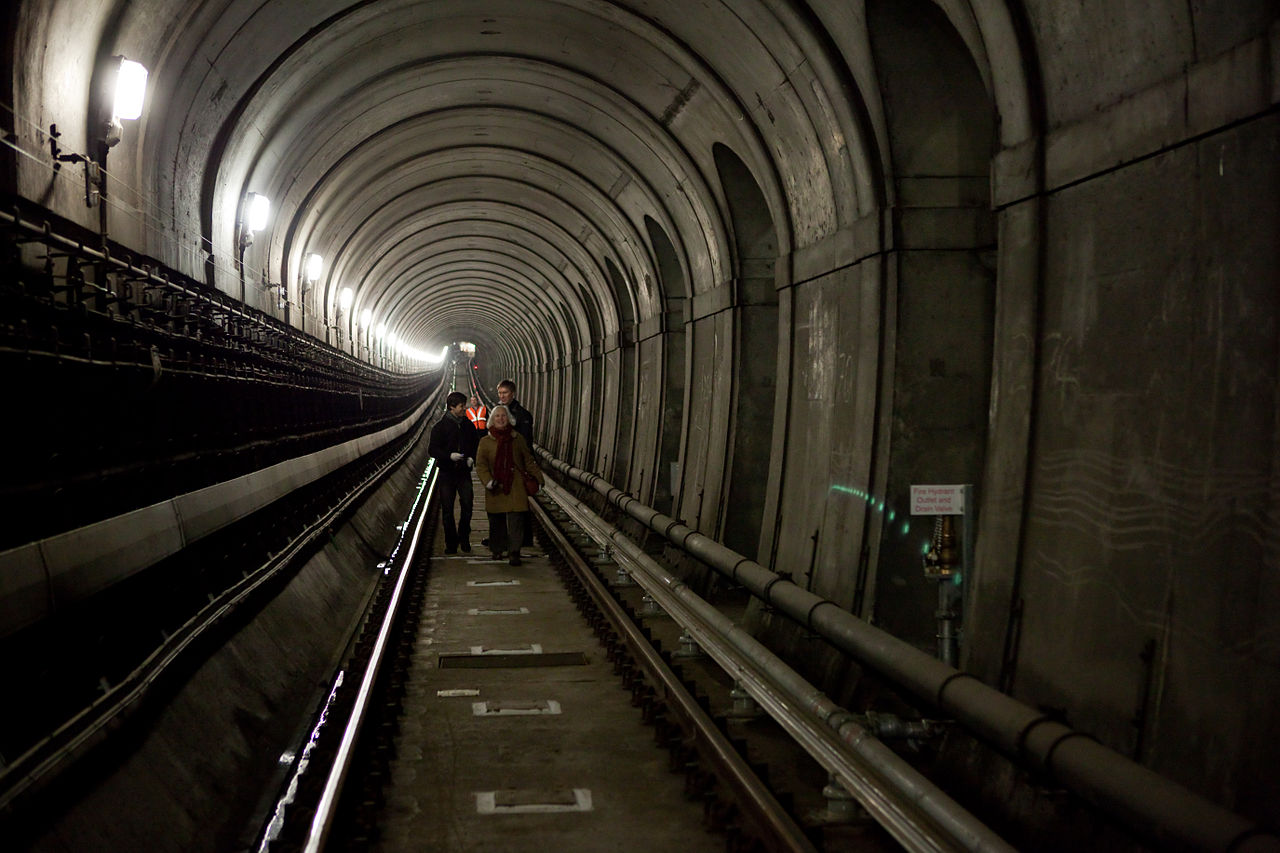
The Thames Tunnel runs beneath the River Thames between Rotherhithe and Wapping in the London Borough of Tower Hamlets. It measures 400 metres long and 23 metres below the river surface at high tide. Marc Brunel designed it with his son Isambard, using a tunnelling shield invented by Brunel and Thomas Cochrane. Construction began in 1825 and lasted until 1843. The tunnel was the first to be built successfully under a navigable river. The tunnel’s creation was a bold engineering feat. Early attempts by Ralph Dodd and Cornish miners failed because of unstable ground. Brunel’s tunnelling shield allowed workers to dig safely in soft clay and quicksand. The project faced many dangers, including floods, gas leaks and methane explosions. Isambard Brunel took charge at just 20 years old after the resident engineer fell ill. Despite setbacks, the tunnel finally opened in 1843. Visitors today find a functional railway tunnel carrying the London Overground. The original brick-lined walls and spiral staircases remain from its pedestrian days. A large shaft at Rotherhithe, once used for construction, still stands on the south bank. The tunnel’s history is visible in its sturdy brickwork and the marks of past struggles. Above ground, the area around Wapping and Rotherhithe reflects the tunnel’s lasting impact on the city.
Opening hours and admission prices change with the season and are therefore not part of this text. Current details from the operator
Nearby
- Brunel Museum190 m
- St Peter's, London Docks435 m
- Prospect of Whitby505 m
- Thames River Police Museum393 m
- King Edward III’s Manor House460 m
- Medieval moated manor house, 43m west of Cathay House476 m
QR-Code