📷 Image: Wikimedia Commons
Conwy Castle
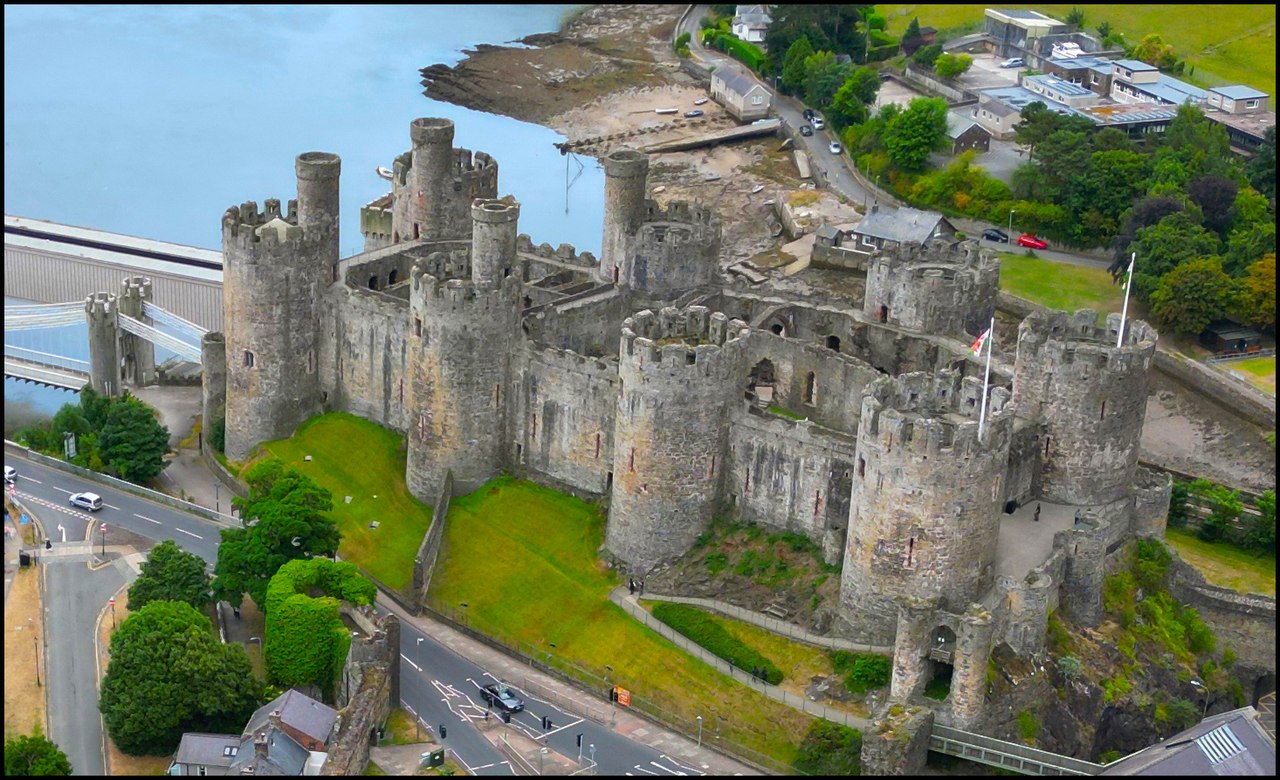
Conwy Castle stands on a rocky ridge above the town of Conwy in North Wales, overlooking the River Conwy. Built between 1283 and 1287 by Edward I, it formed part of a larger scheme to control the region after his conquest of Wales. The castle was constructed with local and imported stone, designed by master mason James of Saint George, who also worked on other Edwardian castles in North Wales. Its layout includes an Inner and Outer Ward, eight large towers, two barbicans, and a postern gate leading to the river for resupply. The castle’s architecture shows strong links to the Savoy, reflecting James of Saint George’s origins. It also incorporates parts of a 13th-century Welsh palace belonging to Llywelyn the Great and his grandson. The castle played a key role in several conflicts, surviving sieges and changing hands during wars. It withstood Madog ap Llywelyn’s attack in 1294–95 and sheltered Richard II in 1399 before his capture. Forces loyal to Owain Glyndŵr briefly seized it in 1401. During the English Civil War, it held out for Charles I until 1646, when it was slighted to prevent further use. By the late 18th and early 19th centuries, artists began visiting, and restoration work followed in the 19th century. Today, it is managed by Cadw as a tourist attraction and recognised by UNESCO as one of Europe’s finest examples of late 13th-century military architecture. Inside the castle, visitors find the best-preserved medieval royal chambers in England and Wales. The ruins include the earliest surviving stone machicolations in Britain, along with the great hall and support arches added by the Black Prince’s chamberlain. The chapel where Richard II met Henry Percy still stands, marking the king’s surrender. The castle’s position on the ridge offers views over Conwy town and the river, while its towers and walls provide a sense of its strategic importance. The nearby town walls, incorporating part of Llywelyn the Great’s palace, add to the historic setting. The combination of military strength and royal heritage makes the site a compelling place to explore.
Opening hours and admission prices change with the season and are therefore not part of this text. Current details from the operator
Nearby
- Conwy Mussel Museum90 m
- Toll House, Conwy Suspension Bridge76 m
- Conwy Suspension Bridge127 m
- Conwy Railway Bridge123 m
- Sarn Helen260 m
- Conwy Civic Hall247 m
QR-Code