📷 Image: Philip Halling · CC BY-SA 2.0 · Wikimedia Commons
Monmouth town walls and defences
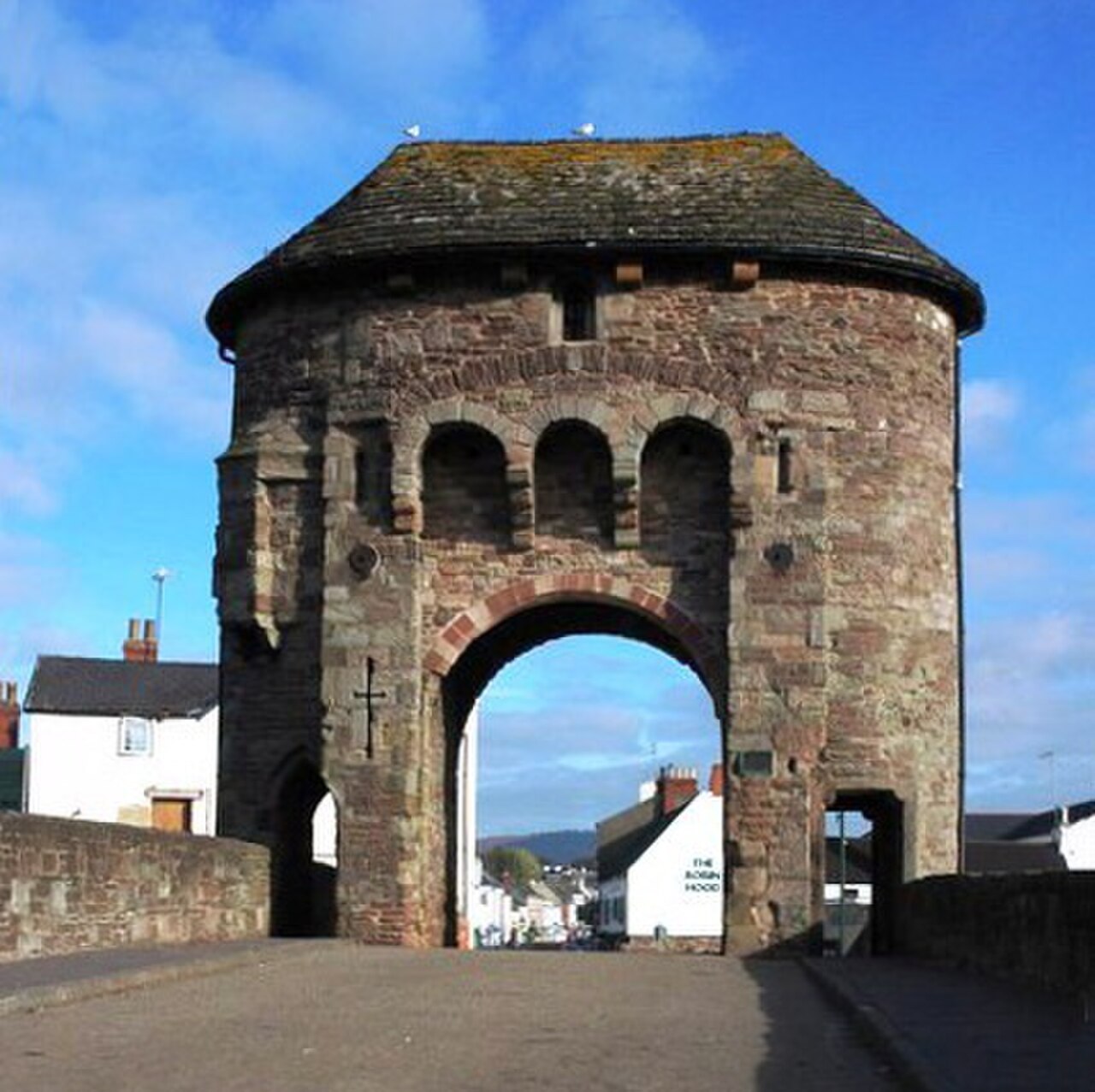
Monmouth’s town walls and defences were built between 1297 and the early 14th century to protect the market town that grew around the Norman castle. The system included five gates: Monnow Bridge Gate, East Gate, Monk’s Gate, Wye Bridge Gate and West Gate. Only the Monnow Bridge Gatehouse remains standing today, though much altered. The walls once stretched from the River Monnow to the castle bailey, with a deep ditch on the outside. John Leland noted their ruinous state by 1538, and parts were still visible in the 17th century. The walls were funded by murage grants secured by Henry de Lancastre, grandson of Henry III, who sought royal permission to tax goods entering the town. These grants were renewed in 1315, showing the work continued for decades. The defences served both military and economic purposes, controlling trade and collecting tolls. The gate towers acted as status symbols as well as checkpoints. Archaeologists have traced sections of the circuit through excavations and old maps. Today the Monnow Bridge Gatehouse is the main survivor, standing on a 13th-century stone bridge with later additions. Its upper storey was raised in the 18th century and pedestrian arches were cut through the towers in the 19th. The gatehouse once housed a lock-up and was garrisoned during the Chartist unrest of 1839. Nearby, the tower of East Gate survives inside the Old Nag’s Head pub, its battered base showing medieval work. The surrounding streets follow the line of the old ditch, and the castle bailey still marks the northern end of the defences.
Opening hours and admission prices change with the season and are therefore not part of this text. Current details from the operator
Nearby
- The Dispensary34 m
- Monmouth Baptist Church43 m
- Judges' Lodgings100 m
- The Rolls Hall102 m
- St James's English Methodist Church117 m
- Queens Head142 m
QR-Code