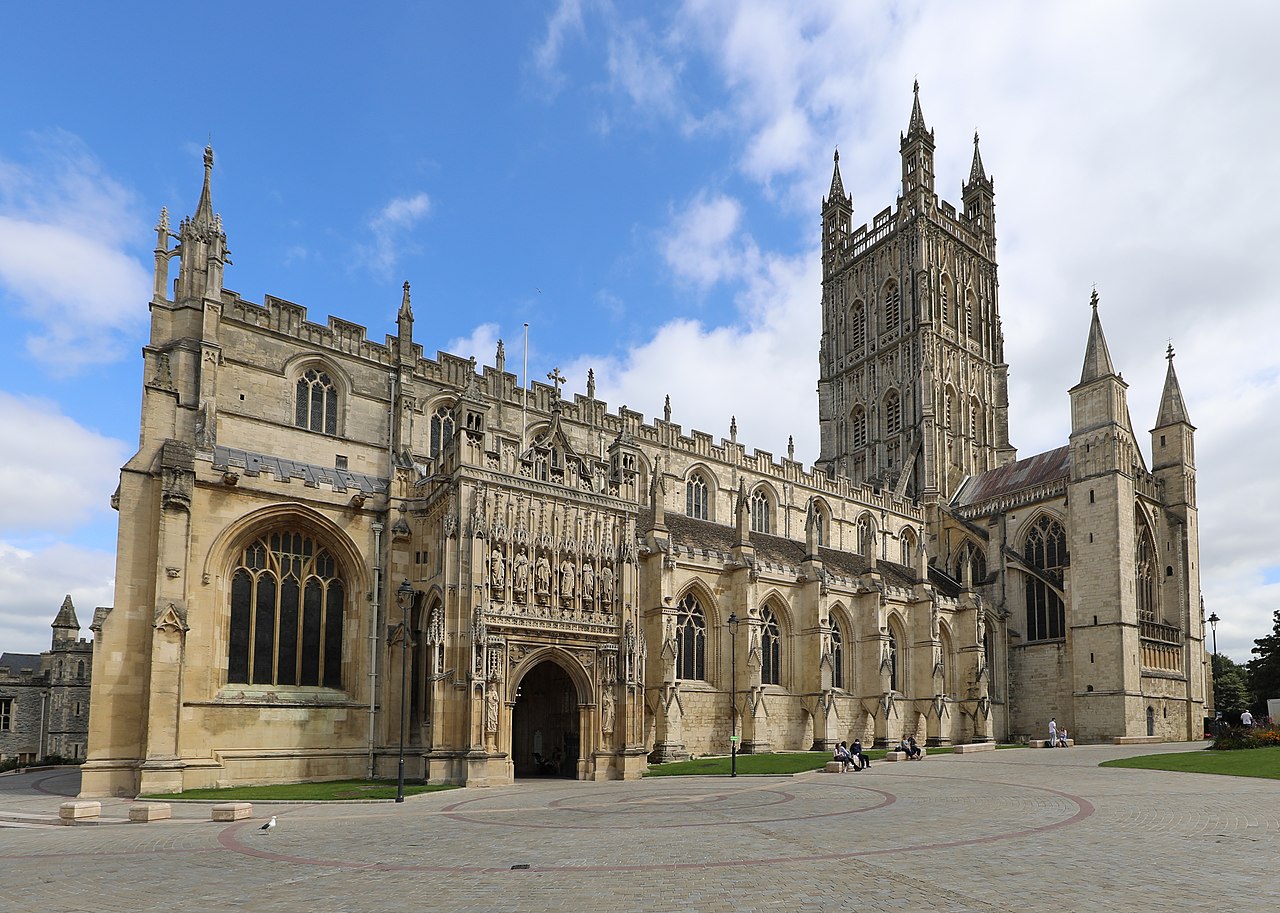
📷 Image: Geni · CC BY-SA 4.0 · Wikimedia Commons
Gloucester Cathedral
Gloucester Cathedral stands in the northern part of the city near the River Severn. It began as a minster founded by Osric, King of the Hwicce, around 679. The site later came under Benedictine control in the 11th century. A major fire in 1088 led Abbot Serlo to rebuild the abbey on a grand scale. William the Conqueror held his Christmas Court here in 1085, where Domesday Book was commissioned. Henry III was crowned in the abbey in 1216 after the death of his father, King John. The cathedral contains the shrine of Edward II, who was buried here in 1327 after his death at Berkeley Castle. The shrine attracted pilgrims and royal patronage, boosting the abbey’s fortunes. The earliest surviving example of structural fan vaulting appears in the 14th-century choir, transepts, and cloisters. The cathedral became a Grade I listed building, with many other listed structures in its complex. These include the Treasury, Chapter House, Cloisters, and medieval gates. Visitors find a grand medieval church with a rich history of royal connections. The fan-vaulted cloisters draw admirers of Gothic architecture. The shrine of Edward II remains a focal point of interest. The cathedral’s interior includes the nave, apse, crypt, and chapter house. Its exterior walls and gates reflect centuries of careful preservation. The site also holds records of its own history, including the *Historia Monasterii Sancti Petri Gloucestriae*.
Opening hours and admission prices change with the season and are therefore not part of this text. Current details from the operator
Discover more in this region
Themes around England
All themes in England →
Nearby
- Gloucester Abbey24 m
- Theatre Royal, Gloucester147 m
- Gloucester173 m
- St Oswald's Priory, Gloucester244 m
- St Mary de Lode Church226 m
- St Nicholas' Church, Gloucester220 m
QR-Code