📷 Image: Wikimedia Commons
Warriston Cemetery
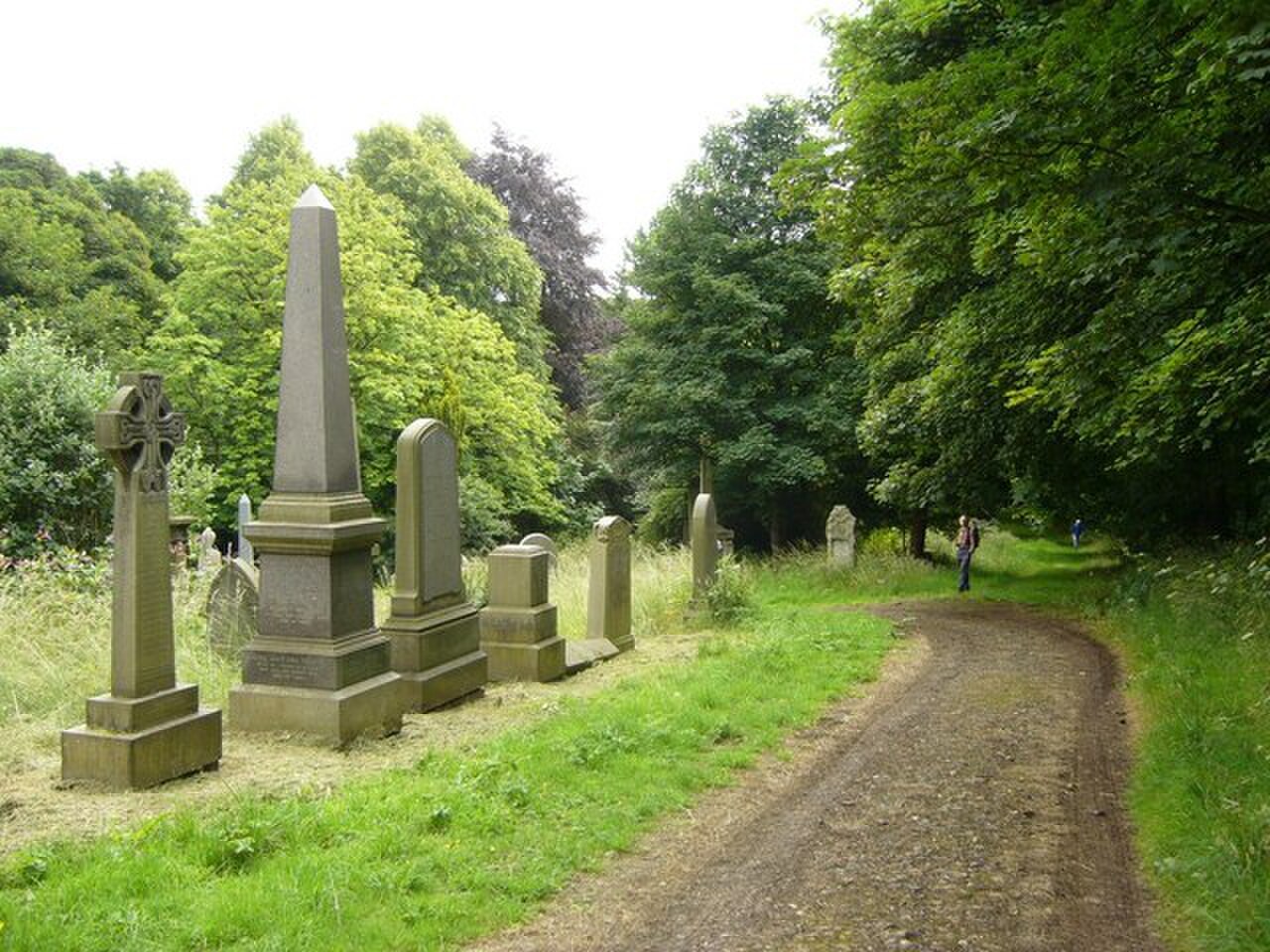
Warriston Cemetery stands on a gently sloping site in the northern suburb of Warriston, Edinburgh. Built in 1843 by the Edinburgh Cemetery Company, it covers about nine hectares beside the Water of Leith. The cemetery was the first garden cemetery in Edinburgh, designed by architect David Cousin with input from James Peddie. Its layout includes a long line of neo-Tudor catacombs, extended in 1862 by John Dick Peddie. A railway line once cut through the southern half, but its embankments have since been removed to create a public walkway. The cemetery holds many thousands of graves, including those of notable Victorian and Edwardian figures. Among them is Sir James Young Simpson, the physician who introduced chloroform anaesthesia. The Friends of Warriston Cemetery, formed in 2013, work to restore the site and encourage biodiversity. Warriston is protected as a Category A listed building and lies within the Inverleith Conservation Area. Parts of the cemetery remain densely overgrown, with ivy-covered headstones and tombs barely visible beneath the vegetation. Visitors find a landscape of deciduous trees and tangled undergrowth, with ornate monuments and Celtic crosses scattered throughout. The Robertson Mausoleum once stood here, known locally as the Tomb of the Red Lady for its red glass roof. Sculptors such as William Birnie Rhind and Thomas Stuart Burnett contributed fine portrait work. The crematorium, designed by Sir Robert Lorimer, lies adjacent to the east. Only the upper section is currently maintained, while the rest remains wild and atmospheric.
Opening hours and admission prices change with the season and are therefore not part of this text. Current details from the operator
Nearby
- Edinburgh North and Leith177 m
- Bellevue Chapel753 m
- Edinburgh Academy885 m
- St Stephen's Church1.1 km
- Royal Botanic Garden Edinburgh725 m
- Catholic Apostolic Church1.0 km
QR-Code