📷 Image: Wikimedia Commons
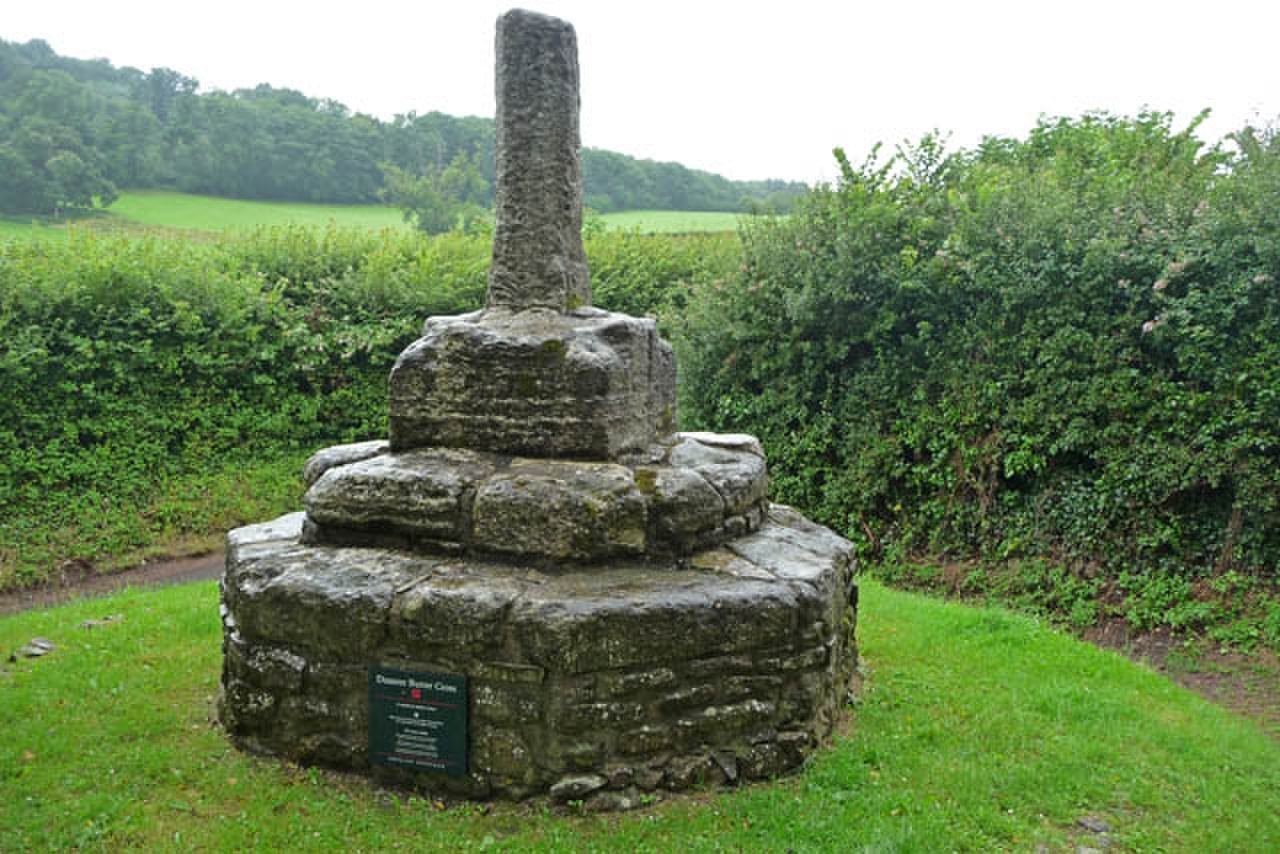
Dunster Butter Cross
The Dunster Butter Cross stands in the village of Dunster in Somerset. It is a scheduled monument and Grade II* listed building. Originally raised in the late 14th or early 15th century, it once marked the market place on the High Street. Later it was moved to St George’s Street at the edge of the village. The shaft and socket stone remain original, though the head of the cross is missing. English Heritage cares for the cross and the National Trust manages the site. The name Butter Cross comes from its use as a market cross where local produce was sold. People came from villages as far away as Taunton and Bodmin to trade at the market. By 1689 it was known as the Butter Cross, recorded in documents of the time. The cross may have been moved in 1776 when the site was levelled by workmen paid by Henry Fownes Luttrell. A drawing by J. M. W. Turner from 1811 shows it already in its present position. Visitors find a small raised area holding the octagonal base and polygonal shaft. The socket stone measures 0.85 metres across and 0.5 metres high. The shaft rises from square to octagonal and stands 1.1 metres tall. An inscription on the northern face reads “WC, 1871, WS,” marking a restoration. The cross offers a quiet reminder of Dunster’s medieval market history.
Opening hours and admission prices change with the season and are therefore not part of this text. Current details from the operator
Nearby
- Dunster Doll Museum378 m
- Post-medieval pottery kiln 360m NNE of the Castle413 m
- Dunster Castle536 m
- West Somerset Railway2.5 km
- Queens Hall, Minehead2.7 km
- Minehead2.7 km
QR-Code