📷 Image: Wikimedia Commons
Chartley Castle
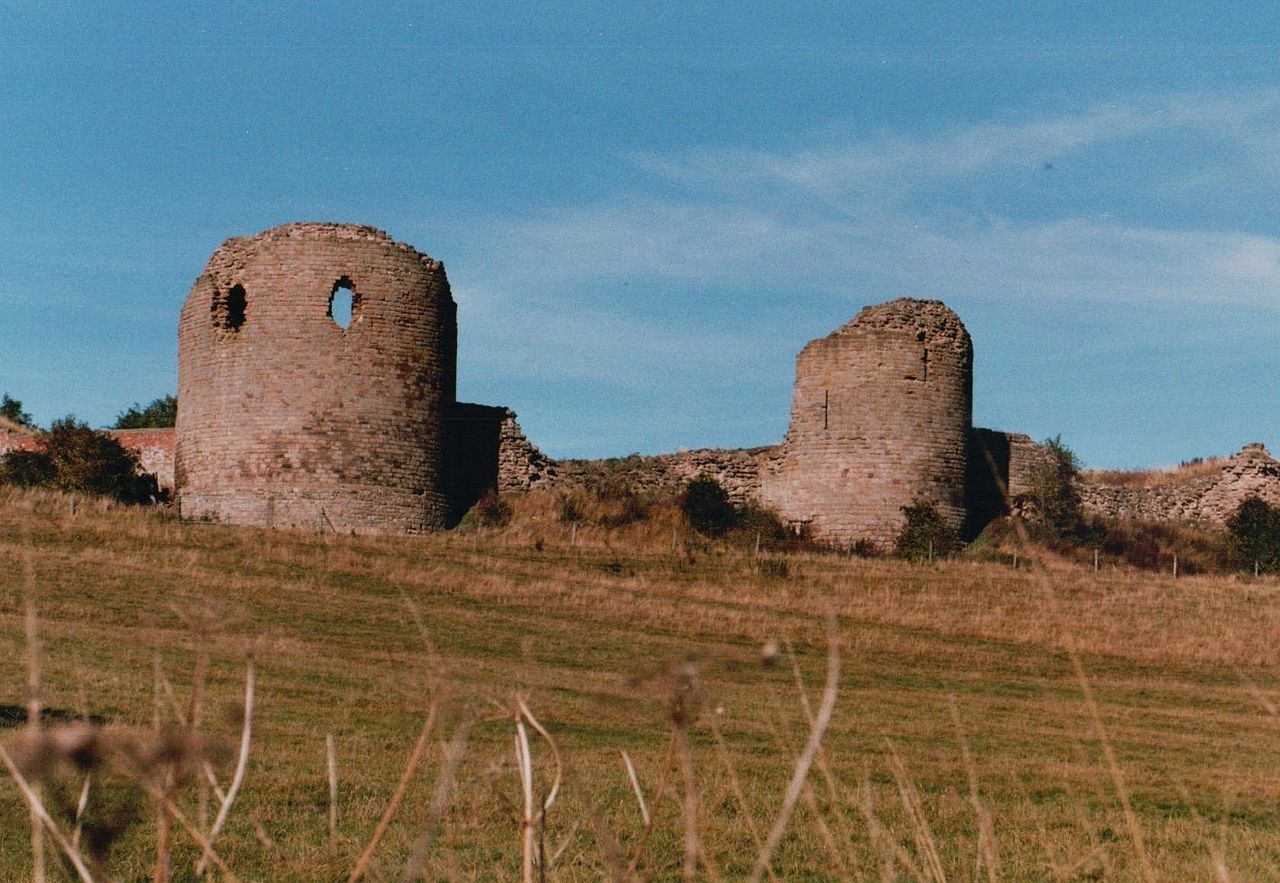
Chartley Castle stands in ruins north of Stowe-by-Chartley in Staffordshire, between Stafford and Uttoxeter. Built as a motte-and-bailey around 1100, it was rebuilt in 1220 by Ranulph de Blondeville, 4th Earl of Chester. The castle passed through several noble families, including the Ferrers and Devereux, before falling into disuse in the 15th century. Mary, Queen of Scots, was imprisoned here in 1585 under the watch of jailor Amias Paulet. The site became a Scheduled Monument in 1925 and is a Grade II* listed building. The castle’s remains include a rare cylindrical keep, curtain walls with two half-round towers, and a twin-towered gatehouse. A 19th-century survey recorded five towers and a keep, with architectural links to French and English castles. The nearby Chartley Manor, a moated mansion, replaced the castle as a residence before burning down in 1781. The manor’s deep moat once allowed laundry to be washed without leaving the house, though Mary, Queen of Scots, disliked its damp setting. Visitors today see substantial ruins set in grassy earthworks, with clear traces of the keep and towers. The site overlooks low-lying land once filled with ponds where Mary watched duck-hunting. The remains of the manor’s moat still mark the spot where she was held before her arrest in the Babington Plot. The landscape reflects the castle’s strategic position near Stafford and Uttoxeter. A quiet country lane leads to the site, offering a glimpse of its medieval past.
Opening hours and admission prices change with the season and are therefore not part of this text. Current details from the operator
Nearby
- Chartley Castle, Chartley Old Hall and associated water control systems including garden remains168 m
- Pasturefields Saltmarsh4.2 km
- Lower Booth moated site and deserted medieval village3.5 km
- River Sow6.1 km
- Shugborough inscription6.1 km
- Shepherd's Monument at Shugborough Hall6.1 km
QR-Code