📷 Image: Wikimedia Commons
Chelsea Physic Garden
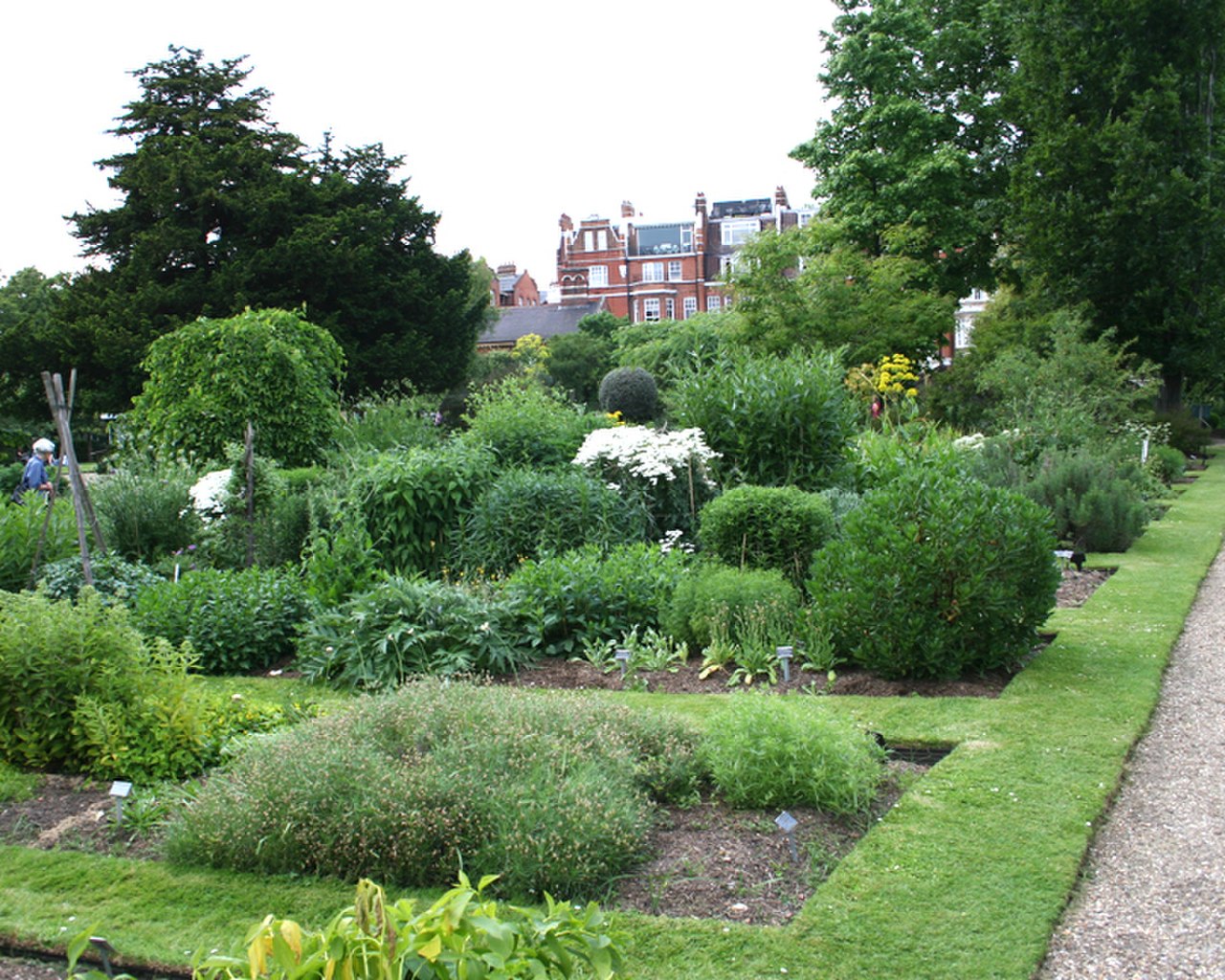
The Chelsea Physic Garden stands on a 1.4-hectare site in the Royal Borough of Kensington and Chelsea. Founded in 1673 by the Worshipful Society of Apothecaries, it was the second-oldest botanical garden in Britain. The garden’s four-metre brick walls create a warm micro-climate that shelters the largest fruiting olive tree in Britain and the world’s northernmost outdoor grapefruit. Its rock garden, the oldest in Europe for alpine and Mediterranean plants, was established soon after the garden opened. The site once adjoined Danvers House, part of the former estate of Sir Thomas More, and was leased to the Apothecaries in 1722 by Sir Hans Sloane for a peppercorn rent. The garden’s golden age came under Philip Miller, who directed it from 1722 to 1770. During this period it supplied the Royal Society with herbarium samples and launched a seed-exchange programme that introduced cotton to Georgia and later spread the Madagascar periwinkle worldwide. Isaac Rand published a catalogue in 1730, and Elizabeth Blackwell used specimens from the garden for her herbal. The garden’s collections were later donated to the British Museum and now form part of the Natural History Museum. Today visitors find five themed areas: the Garden of Medicinal Plants, the Pharmaceutical Garden, the Garden of World Medicine, the Garden of Edible and Useful Plants, and the World Woodland Garden. The paths wind past 5,000 labelled plants while the high walls keep the city at bay. The garden remains a Grade I listed historic park and a member of the London Museums of Health & Medicine.
Opening hours and admission prices change with the season and are therefore not part of this text. Current details from the operator
Nearby
- Restaurant Gordon Ramsay78 m
- National Army Museum228 m
- Chelsea Classic Cinema485 m
- Albert Bridge403 m
- death and funeral of Margaret Thatcher415 m
- Chelsea Flower Show380 m
QR-Code