📷 Image: Wikimedia Commons
Kingley Vale National Nature Reserve
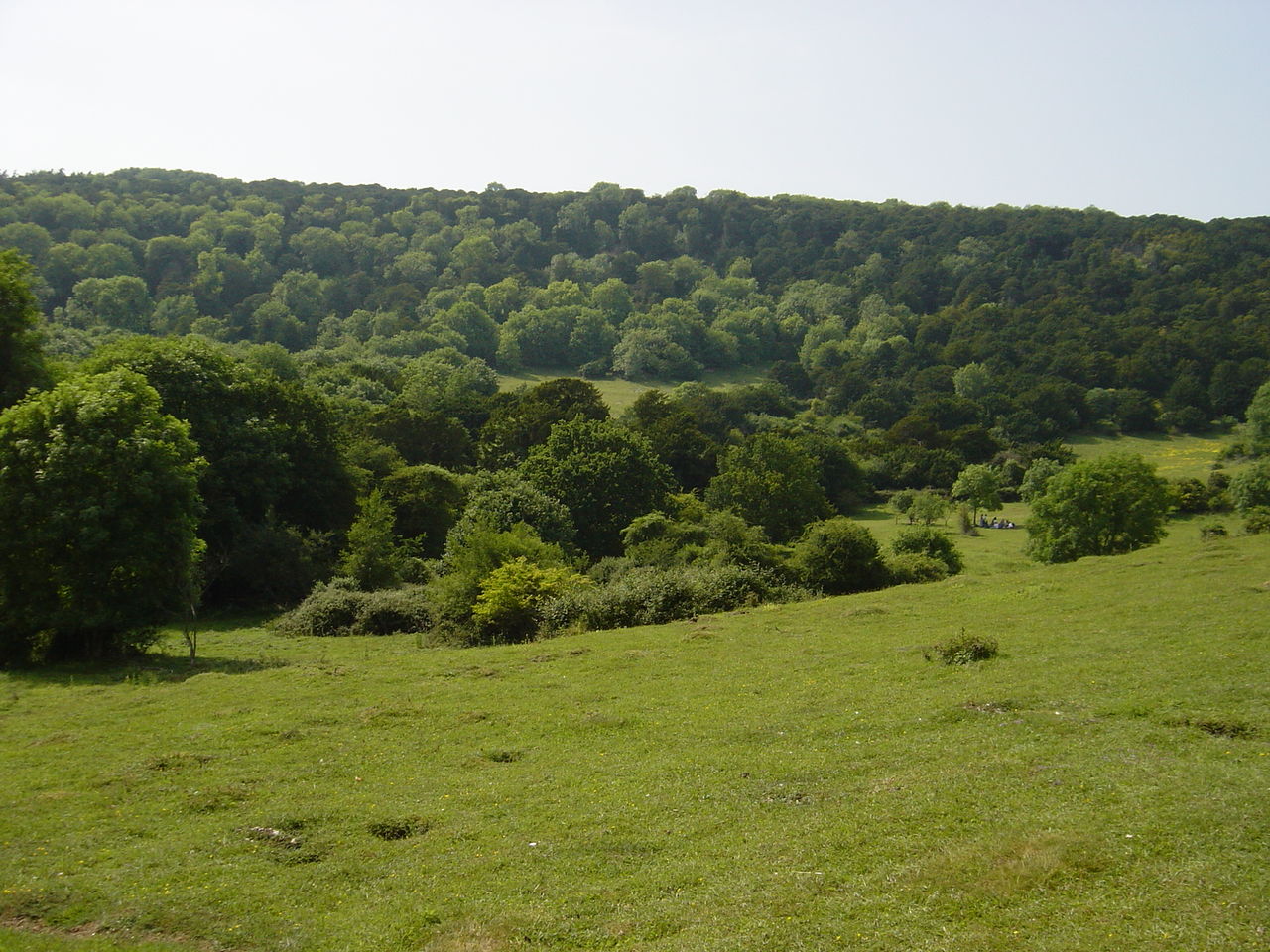
Kingley Vale National Nature Reserve lies north of Chichester in West Sussex. It covers 204 hectares and is recognised as a Site of Special Scientific Interest and a Special Area of Conservation. Part of the reserve is owned by the Forestry Commission and managed by Natural England. An information centre and nature trail welcome visitors at the site. The reserve includes grass downland, shrubland and a striking yew forest. The yew trees here are among Europe’s oldest living organisms, some reaching 2,000 years. Most ancient yews across Europe were cut down after the 14th century for longbow staves, but Kingley Vale’s forest survived. In 1472, a ‘yew tax’ of four bowstaves per wine cask fuelled the demand that wiped out many forests. The reserve also features oak, ash, holly and hawthorn, with clearings created by ash dieback in the 2010s. Over 50 bird species and 39 butterflies inhabit the grassland, while mammals include deer and dormice. The main walk, the Hidden Landscape Trail, passes the Devil’s Humps Bronze Age barrows and Goosehill Camp, an Iron Age settlement. The trail also highlights Second World War Auxiliary units and other ancient features. From the top of the reserve, views stretch over Sussex and the south coast. Bow Hill holds a Romano-Celtic temple and prehistoric flint mines, while linear earthworks and Bow Hill Camp add to the archaeological interest.
Opening hours and admission prices change with the season and are therefore not part of this text. Current details from the operator
Nearby
- An Itford Hill style settlement in Kingley Vale348 m
- A saucer barrow and a bowl barrow on Bow Hill, 270m south east of the Tansley Stone756 m
- Linear boundary 310m north west of the Tansley Stone on Bow Hill964 m
- Linear boundary on Stoke Down, 800m north of West Stoke House922 m
- Bow Hill1.2 km
- Roman temple at Bow Hill1.2 km
QR-Code