📷 Image: Wikimedia Commons
Lendal Tower
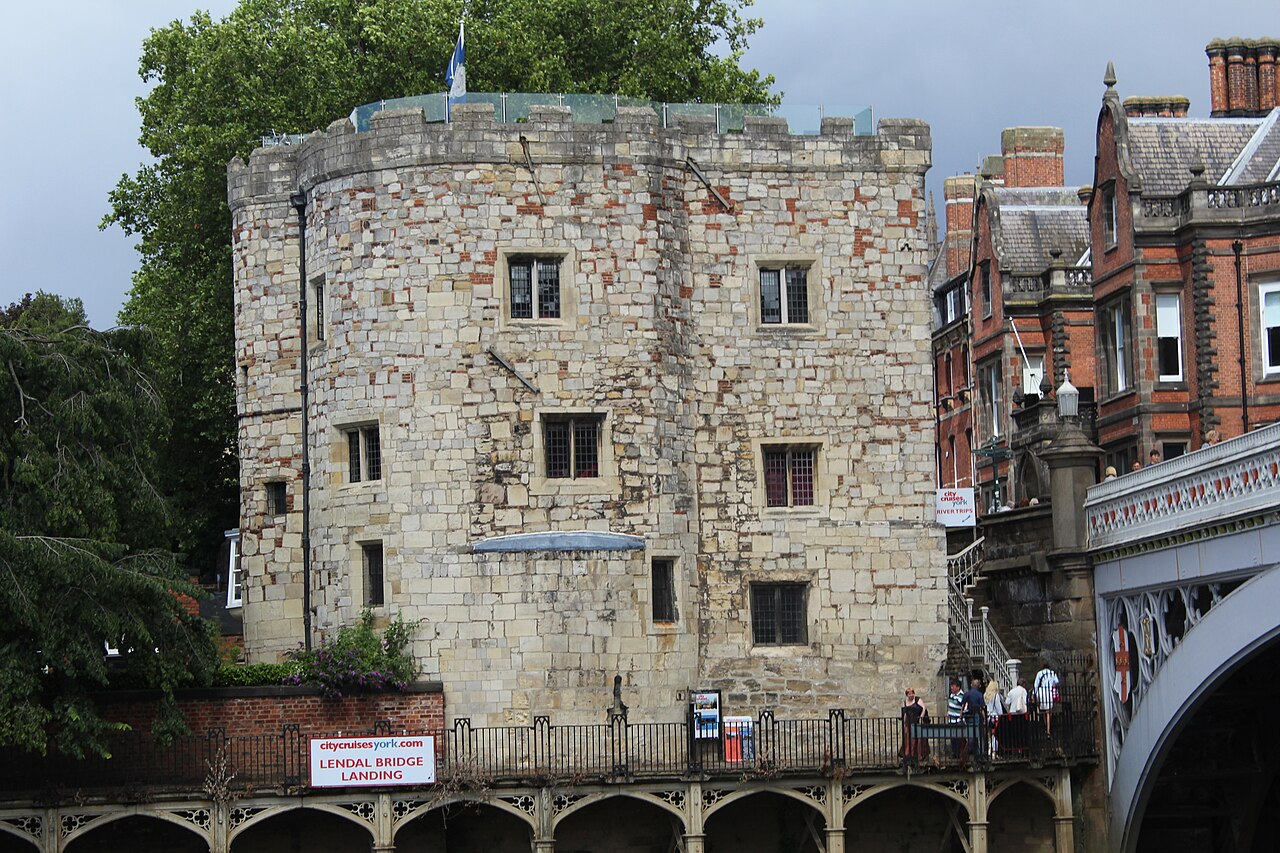
Lendal Tower stands beside the River Ouse where it enters York’s medieval walls from the north-west. A circular stone tower built about 1300, it once formed part of the city’s defences with North Street Postern Tower across the water. An iron chain stretched between the towers to control river traffic and collect tolls until Lendal Bridge replaced the ferry in 1863. The building was first recorded in 1315 as the Tower of St Leonards and later strengthened in the 16th century against rebel lords. From the 17th century the tower became part of York’s water supply, first as a waterhouse then enlarged for a lead cistern and powered by windmill, waterwheel or horse engine. In the 1750s a Newcomen steam engine installed here was rebuilt by John Smeaton in the 1780s, and hot and cold baths were added nearby. After the waterworks moved in 1846 the tower was lowered and given crenellations by G.T. Andrews to restore a medieval look. It served as offices from 1932 and became a Grade I listed building in 1954. Visitors find a stone tower of Magnesian limestone with a copper roof now used as a roof terrace. Inside, brickwork frames remnants of the 18th-century engines and Jacobean panelling from the 1932 conversion. A lift installed then leads to modern rental flats above, while the riverside setting offers views toward the city walls and Lendal Bridge. The tower’s crenellated parapet and historic fabric recall its dual roles as defence and waterworks over seven centuries.
Opening hours and admission prices change with the season and are therefore not part of this text. Current details from the operator
Nearby
- City Wall From Lendal Hill House To The Lodge, Museum Gardens50 m
- Multangular Tower And Wall Attached To South East114 m
- York Museum Gardens136 m
- Yorkshire Museum168 m
- City wall from Multangular Tower to rear of number 8 St Leonards Place161 m
- Anglian Tower180 m
QR-Code