📷 Image: Wikimedia Commons
Whitby Abbey
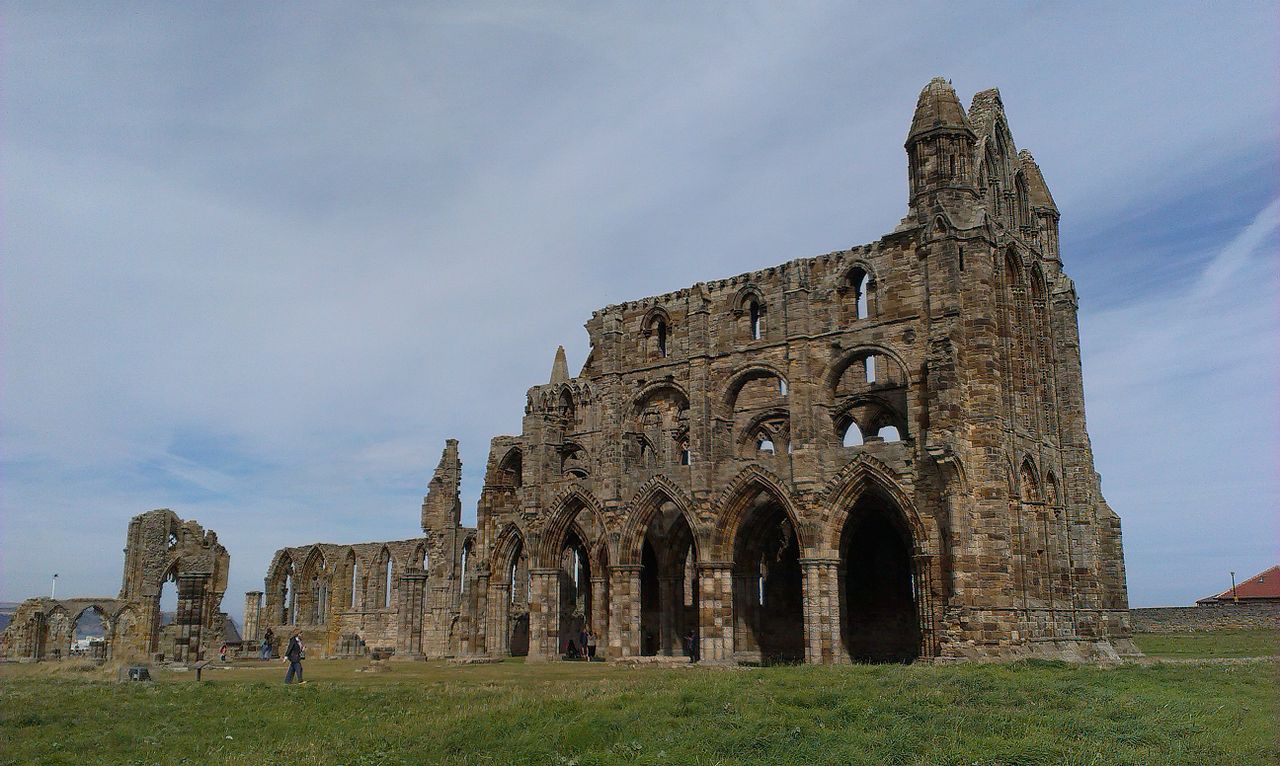
Whitby Abbey stands on the East Cliff above the North Sea in Whitby, North Yorkshire. It began as a 7th-century Christian monastery founded by King Oswy of Northumbria and led by Abbess Hilda. The site later became a Benedictine abbey, rebuilt in the 13th century on a grander scale. After Henry VIII dissolved the monasteries in the 16th century, the ruins passed through private hands before becoming a protected monument. The abbey church once overlooked the sea, guiding sailors for centuries. Today its roofless shell and towering walls remain a landmark. The abbey is famous for the Synod of Whitby in 664, where King Oswy chose Roman Christian customs over those of Iona. It was home to Cædmon, the earliest English poet whose work survives. In 1914 German warships shelled the ruins during a raid on the coast. The abbey’s coat of arms shows coiled snake-stones, fossil ammonites carved as serpents. Bram Stoker used the site in Dracula, linking it to a white lady legend and the 199 steps from the town. Visitors walk among the abbey’s remains, including the nave and transepts framed by the sea. The site museum sits in Cholmley House, a 17th-century banqueting hall. Nearby St Mary’s Churchyard holds graves and the steps Stoker made famous. From the cliff top the view stretches over Whitby and the North Sea. The ruins and their history speak of kings, poets and battles long past.
Opening hours and admission prices change with the season and are therefore not part of this text. Current details from the operator
Nearby
- Church of Saint Mary, Whitby177 m
- Whitby Jet Heritage Centre297 m
- Museum of Whitby Jet298 m
- Whitby East Pier Lighthouse608 m
- River Esk587 m
- Whitby West Pier Lighthouse646 m
QR-Code